Genus Scomber · Chub Mackerel · HS 0303.54

Frozen Pacific Mackerel Supplier — Scomber japonicus

Frozen Pacific mackerel (Scomber japonicus) is the world's highest-volume mackerel species by commercial landings, with FAO data recording over 1,581,000 tonnes annually — a figure that makes it the single most traded mackerel on the planet. Known as saba (サバ) in Japan, where it has been a dietary staple for over a thousand years, frozen Pacific mackerel today moves through global supply chains from the fishing vessels of the Northwest Pacific and the Humboldt Current to processing plants certified to the strictest international food safety standards. Global Mackerel supplies frozen Pacific mackerel whole round, headed and gutted and IQF from Japan, South Korea and Peru — covering the full spectrum of price points, size grades and quality certifications required by importers, distributors and processors worldwide.

#1

Mackerel species by global volume

1,581,000t

Annual FAO landings

Year-round

Supply from 3 origins

Request a Pacific Mackerel Quote
Frozen Pacific mackerel Scomber japonicus whole round IQF, Japan origin

Scomber japonicus — Biology, Identity & Commercial Names

Pacific mackerel (Scomber japonicus) possesses one anatomical feature that immediately distinguishes it from its closest relative, Atlantic mackerel (Scomber scombrus): a fully developed swim bladder. This single biological difference has real consequences in frozen seafood trade. The swim bladder makes Scomber japonicus slightly more buoyant and less dense than Atlantic mackerel at equivalent body weight, which affects the calculation of net weight after glazing and must be accounted for when specifying pack weights in purchase orders. Experienced frozen mackerel buyers always verify net weight tolerances independently of glazing declarations when sourcing Pacific mackerel for the first time from a new supplier.

The species carries a distinctive colour pattern that trained seafood inspectors use to authenticate origin at point of delivery: Scomber japonicus shows wavy dark greenish-blue bands on the back combined with a pale silvery belly marked with irregular dark spots — a pattern absent in Atlantic mackerel, which has clean parallel dark wavy lines on the dorsal surface only, with a completely unmarked silvery underside. This visual distinction is used by quality control teams in Japanese and Korean processing plants to separate the two species when mixed landings occur.

In international trade, frozen Pacific mackerel is sold under several overlapping commercial names depending on market. Chub mackerel is the dominant English trade term. Saba is the Japanese term used in export documentation from Japanese processors. Pacific mackerel or Pacific chub mackerel appears in American and Peruvian trade documents. Buyers should be aware that the name chub mackerel is also sometimes applied to Scomber colias — the Atlantic chub mackerel — which is biologically very close to Scomber japonicus but fished primarily in Atlantic waters from Morocco and the Canary Islands. For export documentation requiring precise species identification, Global Mackerel provides species-specific certificates distinguishing Scomber japonicus from Scomber colias on all shipments.

Frozen Pacific mackerel BQF block 20kg Callao Peru export, Scomber japonicus caballa
Scomber japonicus — BQF block 20kg, Callao processing, Peru origin

Pacific Mackerel Fishing Origins — Three Ecosystems, Three Price Points

The three commercial origins of frozen Pacific mackerel — Japan, South Korea and Peru — are not interchangeable. Each operates within a distinct marine ecosystem, produces fish with different size profiles and fat content characteristics, and serves different end markets. Understanding these differences is the most important piece of commercial knowledge a buyer of frozen Pacific mackerel can possess.

Japan

Premium origin

Japan's Pacific mackerel fishery operates primarily in the waters off the Pacific coast of Honshu and Kyushu, with Nagasaki, Choshi and Kesennuma among the major landing ports. The Japanese fishery is characterised by purse-seine and drift net operations targeting dense surface schools during the autumn feeding season (September–January). Japanese processors produce frozen Pacific mackerel under the most rigorous quality protocols in global mackerel trade — precise size grading to 50g increments, low glazing percentages (8–12%), strict chilled-chain handling between vessel and freezing line, and complete traceability documentation including fishing vessel registration and catch location data. The premium Sekisaba (関サバ) branded mackerel from Oita Prefecture, while primarily a fresh product, has elevated the international reputation of Japanese frozen Pacific mackerel as a premium specification product.

South Korea

High volume

South Korea consumes more Pacific mackerel per capita than any other country on earth — a cultural reality that shapes the entire Northeast Asian mackerel market. Korean mackerel (godeungeo, 고등어) is a national culinary institution, with consumption patterns deeply embedded in daily diet. Korean processors source Pacific mackerel from the East China Sea and the Yellow Sea (August–December) and from Japanese fishing grounds under bilateral trade arrangements. Korean-origin frozen Pacific mackerel is closely comparable to Japanese product in quality terms but typically available at a 5–12% price discount, making it an attractive option for buyers who require Japanese-equivalent specifications at more competitive landed cost.

Peru

Highest volume · Best value

Peru's Pacific mackerel fishery operates in the cold-water upwelling zone of the Humboldt Current — one of the world's most productive marine ecosystems. The Humboldt Current delivers exceptionally cold, nutrient-rich water to the Peruvian coast year-round, sustaining large, stable populations of Scomber japonicus that can be harvested continuously without the seasonal gaps that characterise the Japanese and Korean fisheries. This year-round availability is the defining commercial advantage of Peruvian frozen Pacific mackerel: buyers can plan supply chains twelve months ahead without seasonal price spikes or availability constraints. Peruvian processing plants hold HACCP, IFS and BRC certifications and are approved for export to the EU, USA and all major global markets. Note that Peruvian frozen Pacific mackerel should not be confused with frozen Chilean jack mackerel (Trachurus murphyi) — a different species classified under HS 0303.55 — which is also produced in Peru in large volumes.

frozen jack mackerel from Peru →

The Saba Premium — Why Japanese Frozen Pacific Mackerel Commands Higher Prices

No frozen mackerel product illustrates the relationship between cultural prestige and commercial pricing better than Japanese-origin frozen Pacific mackerel. In Japan, saba (Pacific mackerel) is not merely a commodity fish — it is a culturally significant ingredient central to saba-zushi (pressed mackerel sushi), saba no shioyaki (salt-grilled mackerel) and saba no misoni (mackerel simmered in miso), dishes that have been served at Japanese tables for centuries. This cultural embeddedness creates a quality expectation in Japanese processing and export that elevates the entire product category.

Japanese buyers specify frozen Pacific mackerel with a precision unmatched in any other mackerel import market. A typical Japanese purchase order for frozen Pacific mackerel will specify: species (Scomber japonicus, not Scomber colias), size grade to a 50g range (e.g. 300–350g), minimum fat content (typically 16–18% by Soxhlet method), glazing percentage (maximum 10%), freezing method (IQF only, no block), fishing area (Northwest Pacific, not Atlantic), vessel registration number, catch date range, and processing plant certification number. This level of specification detail has no equivalent in African or Middle Eastern mackerel trade, where buyers typically specify only species, approximate size range and price. Buyers supplying Japanese importers or distributors serving Japanese foodservice must be prepared to provide full documentation on all these parameters — Global Mackerel can supply complete documentation packages for Japanese-specification frozen Pacific mackerel on request.

The premium commanded by Japanese frozen Pacific mackerel over Peruvian product typically ranges from 20–40% on a CIF basis depending on season, size grade and fat content. For buyers in price-sensitive markets, this premium is difficult to justify — but for buyers supplying Japanese restaurants, Japanese retail chains or high-end MENA foodservice operators who specify Japanese-origin product, the premium is non-negotiable. For current price differentials between Japanese and Peruvian frozen Pacific mackerel, see our frozen mackerel price per ton updated monthly.

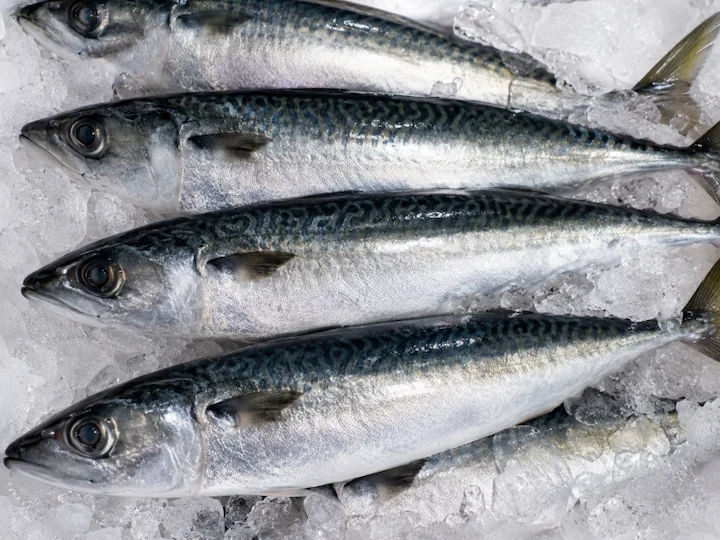
Fat Content in Frozen Pacific Mackerel — What Buyers Need to Know

The fat content of Scomber japonicus is biologically determined by the species' feeding behaviour and the thermal characteristics of its fishing grounds — and it behaves very differently from Atlantic mackerel fat content in commercially important ways. Atlantic mackerel fat content swings from 6% (post-spawning, spring) to 28% (peak feeding, autumn) — a 22-percentage-point variation that makes fat content specification a critical and sometimes contentious element of every Atlantic mackerel purchase order. Pacific mackerel fat content, by contrast, ranges from 8% to 18% across the annual cycle — a much narrower window that gives buyers significantly more predictable product characteristics year-round.

The Humboldt Current fishery in Peru produces the most fat-content-stable frozen Pacific mackerel on the global market. The cold upwelling water of the Humboldt Current maintains consistent sea surface temperatures (12–18°C) year-round, providing Scomber japonicus with a stable food supply that prevents the extreme post-spawning lean period seen in Atlantic stocks. Peruvian frozen Pacific mackerel typically shows fat content of 10–15% regardless of month of catch — a consistency that makes it the preferred specification for buyers who cannot tolerate fat content variation between shipments, such as food manufacturers producing mackerel-based ready meals or canned products where fat content affects final product texture and flavour.

Japanese and Korean frozen Pacific mackerel shows more seasonal fat content variation than Peruvian product, peaking at 16–18% between October and January (autumn feeding season) and dropping to 9–12% in spring. For buyers requiring premium fat content, Japanese autumn-catch frozen Pacific mackerel offers the best specification available from this species. Unlike frozen Atlantic mackerel — where fat content must be specified and tested on virtually every shipment — most buyers of frozen Pacific mackerel from Peru do not specify minimum fat content, relying instead on the inherent consistency of the Humboldt Current ecosystem. For a complete comparative analysis of fat content across all mackerel species and origins, see our frozen mackerel fat content specification guide.

Frozen Pacific Mackerel — Available Formats by Origin

The processing infrastructure of each fishing origin determines which frozen formats are available. Japanese and Korean processing plants — which operate as year-round industrial facilities with significant capital investment in IQF freezing lines — produce the widest range of frozen Pacific mackerel formats. Peruvian plants, which handle very large volumes of multiple species and prioritise throughput efficiency, primarily produce whole round BQF block product. This format difference is commercially significant: buyers who require IQF frozen Pacific mackerel should source from Japan or Korea; buyers who require maximum volume at minimum cost should source BQF whole round from Peru.

Frozen Pacific mackerel available formats by origin
Format Code Description Origins Pack
Whole Round WR Ungutted, frozen in natural state, scales on Japan, Korea, Peru 10kg / 20kg carton
Headless & Gutted H&G Head and viscera removed, tail on, skin on Japan, Korea 10kg / 20kg carton
IQF Whole Round IQF WR Individually quick frozen, free-flowing pieces Japan, Korea 10kg carton
BQF Block BQF Block quick frozen in solid 10kg block Peru 10kg block in master carton
IQF Fillet IQF FL Skin-on fillet, pin-bone in, individually frozen Japan 10kg carton

Glazing percentages, net weight tolerances, carton labelling specifications and private label options are covered in full on our frozen mackerel formats and specifications page.

Wholesale Pacific Chub Mackerel — Size Grades by Origin and BQF/IQF Format

Size grade is the second most commercially important specification for frozen Pacific mackerel after fat content. Pacific mackerel is smaller than Atlantic mackerel — the median market weight of Scomber japonicus is 200–350g compared to 350–500g for Norwegian Scomber scombrus — and size grade distribution varies significantly between origins in ways that buyers must understand before placing purchase orders.

  • 100–200g · 6–10 pcs/kg

    Small grade. Primarily Peruvian origin BQF 20kg block. Dominant specification for price-sensitive Sub-Saharan African buyers in Ghana, Nigeria and DRC. Also used for fishmeal and aquafeed in some markets.

  • 200–300g · 4–6 pcs/kg

    Standard grade. The most widely traded size globally. Available from Peru year-round as BQF 10kg carton and 20kg block export, and from Japan/Korea in summer as IQF whole round. Suitable for all African and MENA markets. Most competitive FOB price per metric ton.

  • 300–400g

    Premium grade. Japan and Korea autumn catch. The sweet spot for East Asian retail and foodservice. Japanese buyers in this grade specify fat content minimum 14%. Higher value-added potential.

  • 400–500g

    Large grade. Japan peak season (October–December) only. Premium price. Suitable for Japanese whole-fish presentation formats including saba-zushi. Fat content typically 16–18%.

  • 500g+

    Super large. Japan only, available in small volumes in November–December peak. Primarily for domestic Japanese premium market. Rarely exported in volume. Highest price per kilogram.

The critical commercial insight for buyers is this: if you require 300–400g or larger frozen Pacific mackerel year-round, Peru cannot reliably supply this specification — Peruvian fish run predominantly 200–300g due to the population structure of the Humboldt Current stock. For consistent supply of 300g+ frozen Pacific mackerel, Japanese or Korean origin is required. Global Mackerel can provide size distribution pre-reports before order confirmation for all origins and seasons.

Frozen Pacific Mackerel Export Markets — Where It Goes and Why

The global demand map for frozen Pacific mackerel divides cleanly along the lines of origin. Japanese and Korean frozen Pacific mackerel flows primarily to East Asian premium markets and to high-specification MENA buyers. Peruvian frozen Pacific mackerel flows primarily to Sub-Saharan Africa and price-sensitive MENA buyers. Understanding this origin-to-market alignment allows buyers to identify the correct sourcing channel for their specific requirements without wasting time negotiating the wrong origin.

East Asia — Japan, Korea, China

East Asia is simultaneously the production hub and the primary consumption market for frozen Pacific mackerel. Japan and South Korea between them consume more Pacific mackerel than the rest of the world combined. Within this market, frozen Pacific mackerel competes with fresh product on the basis of availability and price — frozen product from domestic vessels or Korean imports fills the gap when fresh landings are insufficient for foodservice and retail demand. Chinese imports of frozen Pacific mackerel have grown rapidly since 2015, driven by the expansion of Japanese restaurant chains and Korean cuisine restaurants across Chinese first-tier cities.

frozen mackerel supplier for East Asia →

Sub-Saharan Africa

Sub-Saharan Africa absorbs the majority of Peruvian frozen Pacific mackerel exports by volume. West and Central African markets — Ghana, Nigeria, Benin, DRC, Ivory Coast — have a long-established trade in frozen whole round fish at competitive price points, and Peruvian frozen Pacific mackerel has captured significant market share from Atlantic horse mackerel in the 200–300g whole round segment due to its year-round availability and stable pricing. Buyers in this market typically purchase in 40-foot reefer containers on CIF terms, specifying 20kg bulk cartons.

frozen mackerel supplier for Africa →

Middle East & North Africa

MENA is a split market for frozen Pacific mackerel. Egyptian, Tunisian and Algerian buyers — the largest volume importers — source primarily Peruvian 200–300g whole round product on price-competitive terms. Gulf foodservice operators and Japanese restaurant chains in UAE, Qatar and Saudi Arabia source Japanese-origin IQF product with fat content and size specifications. Turkey is a significant buyer of frozen Pacific mackerel from both origins, processing imported product into value-added retail packs for domestic retail and re-export.

frozen mackerel for the Middle East →

HS Code & Tariff Classification — Frozen Pacific Mackerel

HS Code

0303.54

Scomber japonicus · Frozen

Frozen Pacific mackerel (Scomber japonicus) is classified under HS code 0303.54 — the subheading covering frozen fish of the genus Scomber. This code encompasses all three Scomber species: Scomber scombrus (Atlantic mackerel), Scomber japonicus (Pacific mackerel) and Scomber australasicus (blue mackerel). Buyers must be careful not to confuse frozen Pacific mackerel (HS 0303.54) with frozen Chilean jack mackerel (Trachurus murphyi, HS 0303.55) — a different species that is also produced in Peru in large volumes and sometimes marketed loosely as Pacific mackerel in informal trade. The distinction matters because import duties, veterinary certification requirements and labelling rules may differ between HS 0303.54 and HS 0303.55 in the destination market. For a complete breakdown of applicable duties by market and guidance on correct tariff classification, see our frozen mackerel import and trade guide.

Certifications & Compliance — Japanese, Korean & Peruvian Standards

Certification requirements for frozen Pacific mackerel vary significantly by origin — a fact that catches inexperienced buyers by surprise when they attempt to import Japanese-specification product into a market with specific EU or US requirements. Japanese processing facilities hold the most comprehensive certification portfolios of any mackerel origin: HACCP, ISO 22000, MSC Chain of Custody (for MSC-certified product), and registration under the Japanese Ministry of Health, Labour and Welfare (MHLW) export approval system. EU-destined shipments from Japan require a bilateral EU–Japan seafood trade certificate. Peruvian facilities hold HACCP, IFS and BRC certifications, with EU health certificates available from approved establishments registered on the EU third-country list.

A note on MSC certification specific to frozen Pacific mackerel: MSC-certified frozen Pacific mackerel is available only from Japanese processing facilities with active MSC Chain of Custody certification — a significantly smaller pool of suppliers than is available for MSC-certified Atlantic mackerel from Norway or Iceland. Buyers who require MSC certification for their end market — EU sustainability-labelled retail, for example — must specify Japanese origin and confirm MSC CoC status with the processing facility at order placement. For full certification documentation requirements by destination market, see our certified frozen mackerel supplier page.

✓ HACCP ✓ MSC ✓ ISO 22000 ✓ IFS ✓ BRC ✓ EU Approved

Frozen Pacific Mackerel — Price Benchmarks & Market Dynamics

The price spread between the three origins of frozen Pacific mackerel is wider than for any other commercially traded mackerel species. Japanese IQF frozen Pacific mackerel (300–400g, fat 16%+, peak season) trades at a substantial premium over Peruvian BQF whole round (200–300g, year-round) — a differential that reflects not just quality differences but the cultural premium attached to Japanese-origin product in East Asian and premium MENA markets. Korean-origin product occupies the middle ground, typically pricing 8–15% below Japanese equivalent grade. Peruvian frozen Pacific mackerel prices are influenced by the availability of competing pelagic species in the Southeast Pacific, particularly Engraulis ringens (Peruvian anchovy), whose fishing seasons affect processing capacity and pricing across all Peruvian frozen fish categories. For current CIF and FOB price benchmarks by origin and size grade, see our frozen mackerel price per ton updated monthly.
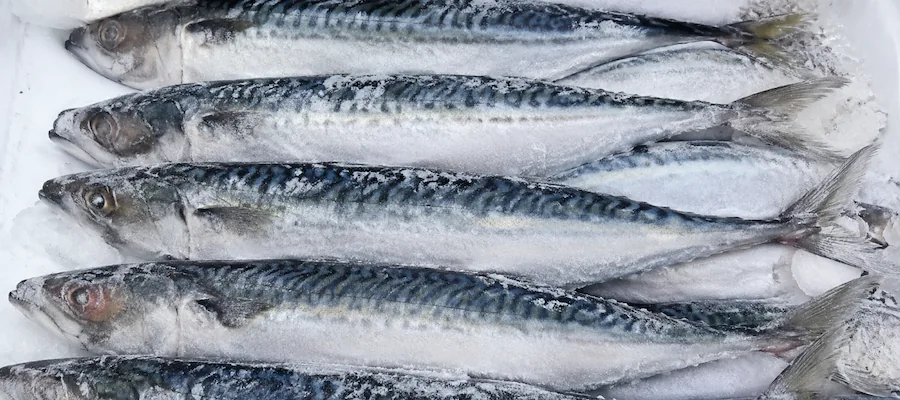
Japanese vs Peruvian Scomber japonicus — The Documentation Gap That Catches Buyers Off Guard

The documentation package for frozen Pacific mackerel changes fundamentally depending on whether the origin is Japan or Peru — a difference that goes far beyond the country-of-origin certificate and that regularly creates customs complications for buyers who switch between the two origins without adjusting their import procedures. Japanese frozen Pacific mackerel exported to the European Union requires a bilateral EU–Japan health certificate issued under the EU–Japan Economic Partnership Agreement (EPA), which specifies the Japanese MHLW-registered processing establishment number on the face of the certificate. Peruvian frozen Pacific mackerel requires a SENASA (Servicio Nacional de Sanidad Agraria) health certificate from a SENASA-registered plant on the Peruvian competent authority list approved by the EU. These are two entirely different certificate formats issued by two entirely different national authorities — buyers who have their EU import documentation process set up for Japanese product and then switch to Peruvian product without updating their customs broker's template will face certificate rejection at EU ports of entry.

For buyers importing to Japan, the documentation challenge runs in the opposite direction. Peruvian frozen Pacific mackerel entering Japan requires a phytosanitary certificate, a certificate of origin, and — for Scomber japonicus specifically — species identification under the Japanese Food Sanitation Act, which requires the scientific name Scomber japonicus to appear on the import documentation to distinguish the product from Scomber colias (Atlantic chub mackerel), which Japanese customs authorities treat as a different product for labelling and allergen purposes. Japanese buyers who previously sourced only domestic Pacific mackerel and are importing Peruvian product for the first time frequently underestimate the species documentation requirement — and find their first Peruvian container held at Yokohama or Osaka pending species confirmation.

MSC certification creates a third documentation track. Buyers who require MSC-certified frozen Pacific mackerel — for EU sustainability-labelled retail, for example — must source exclusively from Japanese processing facilities holding active MSC Chain of Custody (CoC) certification and provide MSC transaction certificates for each shipment. Peruvian Scomber japonicus is not MSC certified. The MSC certificate number, the CoC certificate number, and the MSC licence code of the processing plant must all appear on the commercial invoice for the MSC claim to be valid at destination. Global Mackerel provides complete MSC documentation packages for Japanese-origin certified shipments — buyers should specify their MSC claim requirements at order placement, not at documentary presentation, as retrospective MSC certification is not possible once product has left the certified facility.

A practical note on glazing verification that applies specifically to frozen Pacific mackerel from Peru. Peruvian BQF block product is quoted and invoiced at gross frozen block weight — which includes the weight of the ice matrix in which the fish bodies are embedded. Net fish weight (excluding ice) is typically 80–85% of gross block weight at standard glazing, but this percentage varies between processing plants and even between production batches at the same plant depending on block mould configuration and plate freezer dwell time. Buyers who receive Peruvian frozen Pacific mackerel and pay on gross weight without specifying net fish weight on the purchase order are effectively paying unknown amounts for ice. Global Mackerel specifies net fish weight separately from gross block weight on all Peruvian frozen Pacific mackerel purchase orders and invoices, and provides block thaw yield test reports on request for buyers who need to verify actual net fish weight on delivery.

Frequently Asked Questions — Frozen Pacific Mackerel

What is the commercial difference between frozen Pacific mackerel from Japan and from Peru?
Japanese frozen Pacific mackerel (Scomber japonicus) is produced under premium quality protocols — precise 50g size grading, low glazing (8–12%), IQF format, full traceability documentation — and commands a price premium of 20–40% over Peruvian product. It is the correct specification for buyers supplying Japanese foodservice, premium Asian retail and high-specification MENA operators. Peruvian frozen Pacific mackerel offers year-round availability, competitive pricing and reliable 200–300g whole round BQF supply — making it the preferred specification for high-volume buyers in Sub-Saharan Africa and price-sensitive MENA markets. The two origins serve fundamentally different market segments and should not be treated as interchangeable.
How does frozen Pacific mackerel differ from frozen Chilean jack mackerel — both produced in Peru?
Frozen Pacific mackerel (Scomber japonicus, HS 0303.54) and frozen Chilean jack mackerel (Trachurus murphyi, HS 0303.55) are completely different species that happen to be produced in the same country. Pacific mackerel is a true mackerel of the family Scombridae; Chilean jack mackerel is a horse mackerel of the genus Trachurus. They have different HS codes, different fat content profiles, different size profiles and different market destinations. Confusion between the two is common in informal trade — always verify the scientific name and HS code on shipping documents when sourcing from Peru.
Is frozen Pacific mackerel available with MSC certification?
MSC-certified frozen Pacific mackerel is available from select Japanese processing facilities holding active MSC Chain of Custody certification. The MSC-certified Pacific mackerel fishery in Japan covers specific fishing zones in the Northwest Pacific. Peruvian and Korean frozen Pacific mackerel is not currently MSC certified. Buyers requiring MSC certification must specify Japanese origin and confirm CoC status at order placement. Global Mackerel can supply MSC certificates and CoC documentation for Japanese-origin frozen Pacific mackerel on request.
What is the shelf life of frozen Pacific mackerel stored at −18°C?
Frozen Pacific mackerel stored continuously at −18°C has a shelf life of 18–24 months. However, buyers should note that Pacific mackerel — like all oily fish — is susceptible to oxidative rancidity if the cold chain is broken or if glazing is insufficient to protect the flesh from freezer burn. Peruvian BQF block frozen Pacific mackerel, where fish are encased in a solid ice block, typically shows better oxidation resistance than IQF product during long-haul shipping to tropical markets. All shipments from Global Mackerel include production date, best-before date and minimum storage temperature instructions on carton labels.

Ready to source frozen mackerel?

Send your specs and get a competitive quote within 24h.