
Genus Scomberomorus · Western Atlantic · Gulf of Mexico · SIMP regulated
Frozen King Mackerel Supplier — Scomberomorus cavalla
Frozen king mackerel (Scomberomorus cavalla) occupies a singular position in the global mackerel trade: it is the only species on this site subject to FDA methylmercury consumption advisories, the only one whose primary market is the United States, and the only one whose annual commercial availability is directly constrained by recreational fishing quotas. Known as sierra in Mexico and the Spanish Caribbean, carite in Trinidad and the French Caribbean, and kingfish across the US Gulf Coast, frozen Scomberomorus cavalla serves a geographically specific market — the United States, Puerto Rico, the Caribbean — that operates under regulatory frameworks — SIMP, NOAA stock management, FDA mercury labelling — that no other frozen mackerel species on this site must navigate.
Market
US · Caribbean · Atlantic
Mercury
FDA advisory — 0.73 ppm avg
Regulatory
SIMP · NOAA dual-stock
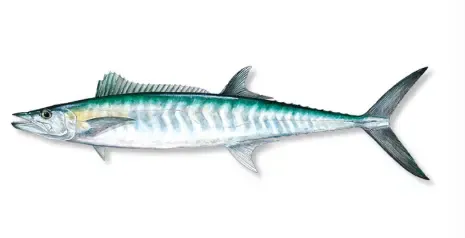
Scomberomorus cavalla — The Apex Predator of the Western Atlantic and Its Commercial Consequences
Scomberomorus cavalla is the largest commercially caught species of the genus Scomberomorus — reaching 173cm and 45kg — and sits at the apex of the Western Atlantic pelagic food web. Where S. commerson (narrow-barred Spanish mackerel, covered on a dedicated page on this site) is a fast-water ambush predator of coastal and reef-adjacent zones, S. cavalla is an open-water pursuit predator that hunts actively in mid-water columns from the Gulf of Mexico through the Caribbean to the Brazilian coast. It feeds on menhaden, herring, mullet, jacks and squid — large, energy-dense prey that it pursues at sustained speeds of 40–50km/h. This position at the top of the food chain has a direct metabolic consequence: bioaccumulation. Every predator that S. cavalla eats has already bioaccumulated mercury from its own prey. King mackerel, eating multiple generations of mercury-contaminated prey over a lifespan of up to 26 years, concentrates methylmercury in its muscle tissue at levels that no schooling plankton-feeder like Scomber scombrus or filter-feeder like Rastrelliger kanagurta can approach.
The commercial profile of frozen king mackerel reflects its size and predatory lifestyle. S. cavalla is sold in whole round sizes of 2–15kg — far larger than most other species on this site except the largest S. commerson — and is also processed into steaks and fillets for the US retail and Caribbean foodservice channel. The flesh is firm and white at smaller sizes (under 5kg), becoming progressively darker and more strongly flavoured in larger fish over 8kg. US buyers — the primary market for frozen king mackerel — specify size explicitly: smaller fish (2–5kg) for the Hispanic retail market where whole fish presentation is preferred, larger fish (6–15kg) for the US Gulf Coast foodservice market where steaks are the dominant format. A king mackerel supplier quoting CIF Miami or San Juan needs those size lanes spelled out on the offer sheet because substitution across lanes changes both price and end-customer acceptance.
No other species on this site has the United States as its primary frozen export destination. Atlantic and Pacific mackerel flow to other regions; king mackerel concentrates on the US Gulf Coast states (Florida, Louisiana, Texas, Mississippi, Alabama), the Northeast US Hispanic retail corridor, and the Caribbean — Puerto Rico, Dominican Republic, Cuba, Jamaica, Trinidad and Tobago. This geographic specificity means that buyers of frozen S. cavalla are operating in a market governed heavily by US federal rules — FDA, NOAA, USDA, and SIMP traceability — with a compliance profile unlike other buyer geographies Global Mackerel serves. If your category team needs a Latin-name cross-check before signing a charter, start with our frozen mackerel species identification guide, then return here for US-only controls.
| Species | Size range | Primary market | Mercury advisory | Key regulation |
|---|---|---|---|---|
| S. commerson | 2–15 kg | Middle East · SE Asia · Pacific | Low — not on FDA elevated list | Destination import rules (non-US primary) |
| S. cavalla | 2–45 kg | USA · Caribbean | High — FDA advisory (mean ~0.73 ppm methylmercury) | SIMP · NOAA zones · FDA mercury label |
Frozen Scomberomorus cavalla is typically traded at USD 3,200–4,800 per metric ton CIF US Gulf or Florida hub for premium whole round IQF in mainstream commercial grades, with Caribbean CIF quotes running in a similar band depending on glaze, size grade and whether the lot is Gulf-zone or Atlantic-zone certified in the seller paperwork. Spot tiers widen when NOAA signals an in-season tightening of commercial quota. To buy frozen king mackerel with predictable landed cost, contract early-season volume and attach the intended NOAA statistical zone to the PO so the exporter can pre-align vessel logbooks before production.
For the other large Scomberomorus line on this catalogue — different markets, different muscle chemistry, different documentation stack — see frozen Spanish mackerel — Scomberomorus commerson.
Methylmercury in Frozen King Mackerel — FDA Restrictions, Labelling Obligations and What Buyers Must Disclose
The FDA and EPA jointly issue methylmercury advisories for commercially sold fish in the United States. Scomberomorus cavalla — king mackerel — is listed in the FDA "Do Not Eat" category for women who are pregnant, breastfeeding or may become pregnant, and for children under 11. For the general adult population, the FDA advises eating no more than one serving per month. The basis for this advisory is FDA monitoring data: the mean methylmercury concentration in king mackerel muscle tissue is 0.73 parts per million (ppm), with individual fish regularly exceeding 1.0 ppm. No other species on this site — not Atlantic mackerel, not Pacific mackerel, not horse mackerel, not Spanish mackerel — appears on the FDA elevated-mercury advisory list. This is not a commercial stigma. It is a biological fact of the species' trophic position, and it is a fact that every buyer of frozen king mackerel must understand, communicate to retail and foodservice customers, and reflect in product labelling. Importers should treat king mackerel mercury disclosure as a standing item on the technical data package, not a footnote.
The methylmercury advisory has no equivalent in other mackerel species traded globally and restructures the US distribution landscape for frozen king mackerel in ways that buyers must map before their first shipment. The National School Lunch Program (NSLP) and Women, Infants and Children (WIC) federal nutrition programmes exclude species on the FDA "Do Not Eat" list from approved food lists — which means frozen S. cavalla cannot be sold into institutional school food and WIC retail channels that represent a significant share of frozen seafood volume in US Gulf Coast and Caribbean-American communities. Major US grocery chains — Kroger, Publix, Walmart — maintain internal seafood safety policies that reference the FDA/EPA joint advisory and restrict or require specific mercury labelling on king mackerel at retail. None of these channel restrictions apply to other mackerel species on this site. Buyers who enter the king mackerel US import channel without mapping these exclusions first discover them at the buyer specification stage — after the container is already confirmed.
In Caribbean markets — Puerto Rico, Dominican Republic, Cuba, Jamaica, Trinidad and Tobago — frozen king mackerel (sierra, carite or kingfish by territory) is often sold under local food safety regimes rather than direct FDA jurisdiction. Caribbean buyers of frozen Scomberomorus cavalla are generally not subject to the same institutional procurement restrictions as US mainland buyers. However, buyers who re-export from Caribbean ports to the US mainland, or who supply territories with US federal programme funding for food assistance, should verify applicable methylmercury advisory requirements with compliance counsel before contracting. For third-party audit stacks and cold-chain certificates that sit alongside chemical risk communication, see frozen mackerel quality and food safety certifications.
FDA / EPA Methylmercury Advisory — Scomberomorus cavalla
- → Mean Hg concentration: 0.73 ppm (FDA monitoring data)
- → Category: "Do Not Eat" for pregnant/breastfeeding women and children under 11
- → General adults: no more than 1 serving/month
- → No other species on this site appears in FDA elevated-mercury advisory categories
- → Buyers must verify current FDA labelling requirements with regulatory counsel — requirements may have changed since this page was published
FDA advisory language on packs and menus is a moving compliance surface: this page summarises widely cited public advisory categories and does not constitute legal advice.
SIMP Compliance for Frozen King Mackerel Imports into the United States
SIMP — the NOAA Seafood Import Monitoring Program — is a US federal traceability requirement for designated priority species, including all Scomberomorus. It is administered by the National Marine Fisheries Service (NMFS) and mandates that importers file specific harvest data through the Automated Commercial Environment (ACE) system before the shipment arrives at the US port. The required fields for frozen king mackerel are: species scientific name (Scomberomorus cavalla), product form, weight, harvest date or date range, harvest area (NOAA statistical zone), fishing vessel name and flag state, and the name of the harvesting entity. This data cannot be submitted retroactively — which is why the paperwork chain must be complete before the reefer closes at origin.
A frozen king mackerel shipment that arrives at a US port of entry without complete SIMP data filed in ACE is subject to hold by US Customs and Border Protection (CBP) pending resolution. A hold on a reefer container of frozen fish at a US port generates daily detention charges ($150–400/day depending on port and carrier), potential re-inspection requirements, and — in cases where SIMP data cannot be provided — refusal of entry and forced re-export. The cost of a SIMP-related hold on a 20-tonne container of frozen king mackerel, including detention, re-inspection, and logistics for alternative disposal, routinely exceeds the commercial margin on the shipment. SIMP compliance is not optional and it is not recoverable after departure from the origin port.
Every exporter supplying frozen Scomberomorus cavalla to the US market must be able to provide the following before the container is loaded: the NOAA statistical fishing zone(s) where the fish was harvested, the vessel registration number and flag state of the catching vessel(s), the fishing date or date range, and the product weight and form. This documentation chain begins at the fishing vessel and must be maintained unbroken through processing and export. Exporters who cannot provide the complete vessel-to-exporter traceability chain for S. cavalla should not accept US-destined purchase orders — the compliance risk falls on the US importer, who will hold the exporter contractually liable. For chapter notes, ACE field logic and broker checklists shared across species, use our frozen mackerel US import and trade documentation guide.
SIMP filing requirements — frozen king mackerel imports to the US
- → Scientific name: Scomberomorus cavalla — exact, on every document
- → Harvest area: NOAA statistical zone (Gulf: 10–17 / Atlantic: 1–9) — from vessel logbook
- → Fishing vessel name + registration number + flag state
- → Harvest date or date range (not production date — capture date)
- → Product form at import: WR / H&G / steaks / fillets
- → All data filed in ACE before vessel arrival at US port
- → Importer of Record holds SIMP documentation for 2 years post-entry
Gulf Stock vs Atlantic Stock — Two NOAA Quotas, Two Documentations, One Frozen King Mackerel
Every frozen king mackerel shipment entering the United States carries a mandatory SIMP harvest area declaration filed in ACE before the vessel arrives at the US port. This harvest area field does not accept "Atlantic Ocean" or "Gulf of Mexico" as valid entries — it requires a specific NOAA statistical zone number. NOAA statistical zone 10–17 identifies Gulf of Mexico catches. NOAA statistical zone 1–9 identifies South Atlantic and Mid-Atlantic catches. The zone number is not interchangeable: a shipment filed under zone 12 (central Gulf) cannot be amended to zone 4 (North Carolina coast) post-filing, because the NOAA statistical zones determine which Fishery Management Plan — the Gulf of Mexico FMC or the South Atlantic FMC — has regulatory authority over that product. An importer who files the wrong zone has not made a clerical error — they have filed SIMP data that misrepresents which quota allocation the fish was caught against, which constitutes a federal compliance violation regardless of intent and regardless of whether the fish itself is physically identical.
The Gulf/Atlantic stock distinction is not an academic regulatory category — it is a mandatory SIMP data field. Every frozen king mackerel shipment to the US must specify the NOAA statistical harvest zone, which determines whether the fish is Gulf-origin or Atlantic-origin product. Gulf king mackerel zones are 10 through 17. Atlantic king mackerel zones are 1 through 9. An importer who files Gulf-zone ACE data for fish that was actually caught in Atlantic waters — or vice versa — has filed incorrect SIMP data, which constitutes a federal violation regardless of intent. Buyers who blend inventories without zone-level segregation should expect their US counsel to reject the practice before the first entry summary is filed.
| Parameter | Gulf migratory group | Atlantic migratory group |
|---|---|---|
| Managing council | Gulf of Mexico FMC (GMFMC) | South Atlantic FMC (SAFMC) + ASMFC |
| NOAA statistical zones | 10–17 (Gulf of Mexico) | 1–9 (S. Atlantic / Mid-Atlantic) |
| Primary fishing states | Florida (Gulf coast) · Louisiana · Texas | Florida (Atlantic coast) · N. Carolina · Virginia |
| Peak season | Nov–Mar (winter run south) | Apr–Oct (northward spring migration) |
| Quota system | Sector allocation — commercial quota + rec quota | Sector allocation — commercial quota + rec quota |
| SIMP harvest area field | NOAA zone 10–17 (mandatory) | NOAA zone 1–9 (mandatory) |
| In-season closure risk | High — Gulf quota fills faster | Moderate — larger Atlantic quota allocation |
Every purchase order for frozen Scomberomorus cavalla destined for the US must specify the required NOAA statistical zone — not just "Gulf" or "Atlantic" — because this zone number is the primary identifier in the ACE SIMP filing. A buyer who leaves zone unspecified creates a situation where the exporter files whatever zone the vessel logbook shows, which may not match the end-customer's procurement requirements. Some US wholesale buyers — particularly those supplying Gulf Coast restaurant chains that market "Gulf-caught king mackerel" as a provenance claim — specifically require Gulf zone 10–17 product and will reject Atlantic-zone product on receipt even if sensory quality is identical. State the zone in the PO. Build zone-specific substitution clauses with five-business-day advance notice into any framework agreement.
Recreational vs Commercial Fishing — How Sport Fishing Quotas Disrupt Frozen King Mackerel Supply Without Warning
Scomberomorus cavalla is one of the most intensely targeted recreational fishing species in the Gulf of Mexico and the US South Atlantic. The annual king mackerel tournament circuit — running from Texas to North Carolina between spring and autumn — attracts tens of thousands of anglers and generates economic activity that dwarfs the commercial fishery in states like Florida and North Carolina. This recreational demand has direct consequences for the commercial frozen king mackerel supply chain: the annual Total Allowable Catch set by NOAA for each stock is divided into a commercial allocation and a recreational allocation, and both sectors are managed against the same biological quota. When the recreational sector exceeds its allocation — which has happened in multiple years since the current management plan was implemented — NOAA's response may include early closure of the commercial season to offset the recreational overage, compensatory reductions in the following year's commercial quota, or emergency in-season adjustments that give commercial buyers 24–72 hours notice of closure.
The Gulf of Mexico commercial king mackerel quota has been closed before its nominal end date in multiple fishing years, with closures announced mid-season as recreational landings data were updated in the NOAA MRIP (Marine Recreational Information Program) survey system. The lag between recreational fishing events and their appearance in NOAA's MRIP database means that by the time NOAA identifies a recreational overage and acts, commercial buyers may already have purchase orders in process — with vessels at sea, processing plants with frozen inventory pre-allocated, and letters of credit confirmed. There is no commercial mechanism to reverse a NOAA quota closure announcement, and there is no compensation for commercial operators whose season is curtailed by recreational overages.
The practical response for frozen king mackerel buyers is to treat the commercial season end date as a soft deadline rather than a hard supply guarantee. Purchase orders for frozen S. cavalla should be placed early in the commercial season — November for Gulf stock, April for Atlantic stock — with delivery windows that close before the nominal end of the commercial quota period. Buyers who require Q4 supply from Gulf stock should place orders by January at the latest, with delivery before March 31. Buyers who wait until the end of the season for spot pricing consistently find themselves bidding on a contracting supply as quota closure approaches and processors prioritise existing committed orders over spot business.
Operational note: frozen kingfish cavalla inventory tied to a specific NOAA zone on the harvest record cannot be repriced as generic "kingfish" at US entry — the ACE line is zone-specific.
Indicative seasons based on NOAA GMFMC / SAFMC historical patterns. Actual quota openings / closures announced by NOAA — verify before contracting.
Frozen King Mackerel Buyers — Indian Ocean and MENA Chains on the Same Desk
Frozen king mackerel is not an Indian Ocean product, but many importers who run frozen king mackerel alongside other Scombridae lines use the same treasury, logistics and inspection teams for Gulf-origin US entries and for unrelated pelagic programmes sourced elsewhere. Mapping those workflows separately reduces the risk that a documentation template built for another species is pasted into an ACE SIMP filing for Scomberomorus cavalla.
- → Indian Ocean pelagic sourcing and landing geography — parallel reading for buyers who split procurement between US-zone king mackerel and other origins.
- → Middle East and North Africa frozen fish import channel — where different Scombridae species dominate the mix and US-style SIMP fields do not apply.
- → all frozen mackerel products — return to the species index after you confirm zone-level harvest documentation for the US lane.
Frequently Asked Questions — Frozen King Mackerel (Scomberomorus cavalla)
- Why does frozen king mackerel (Scomberomorus cavalla) carry an FDA methylmercury advisory that no other mackerel species has?
- Scomberomorus cavalla is an apex predator with a long-lived, piscivorous diet in the Western Atlantic. Methylmercury concentrates in muscle through repeated trophic steps. FDA monitoring places king mackerel in the elevated-advisory categories used for retail and institutional channel decisions. Schooling mackerel species lower in the food web do not reach comparable tissue concentrations — which is why they are managed under different shelf and programme rules in the United States.
- What is SIMP and why does it apply specifically to frozen king mackerel imports into the United States?
- SIMP is NOAA’s priority-species import traceability programme. For Scomberomorus cavalla, the importer must file harvest vessel, zone, dates and product form in ACE before arrival. Incomplete filings trigger CBP holds and detention. The programme is US-specific — which is why frozen king mackerel bound for non-US destinations follows a different documentation stack even when the fish is identical.
- What is the difference between Gulf stock and Atlantic stock frozen king mackerel for US import documentation?
- The ACE harvest-area field must carry a NOAA statistical zone number, not a narrative ocean name. Zones 10–17 correspond to the Gulf migratory group; zones 1–9 correspond to the Atlantic migratory group. Those codes tie the fish to a specific quota accounting line. Substituting Atlantic-zone fish under a Gulf-zone filing — or the reverse — is a compliance failure independent of product sensory quality.
- How do recreational fishing quotas affect frozen king mackerel supply and when should buyers place orders?
- Commercial and recreational removals share a single biological cap per stock. When MRIP-derived recreational landings push the recreational sector past its allocation, NOAA can shorten the commercial season or reduce future commercial quota. Buyers who need continuous frozen king mackerel for US kitchens should front-load purchases early in the Gulf (winter) and Atlantic (spring–summer) commercial windows and avoid end-of-season spot dependence.
Ready to source frozen mackerel?
Send your specs and get a competitive quote within 24h.