
Scomber japonicus · Trachurus japonicus · MFDS certified · FOB Busan · KOREU FTA
Frozen Mackerel from South Korea — Busan Suppliers, FOB Price Guide and Container Consolidation
Frozen mackerel South Korea programmes anchor on frozen mackerel Busan loadings: the port is where certificates, cold stores and liner bookings align. South Korea is simultaneously a very large domestic market for Pacific chub mackerel and one of the largest industrial exporters of frozen pelagic lines to global B2B buyers. From Busan — a top-tier global container port — south korean frozen pelagic fish exporters ship Scomber japonicus (Pacific chub mackerel) and Trachurus japonicus (Japanese jack mackerel) to West Africa, MENA and Eastern Europe on FOB terms that, for matched size and freeze format, often sit in a lower FOB band than parallel Japanese-origin offers in the same tender week — without copying the species pages here. Three major groups anchor the export landscape: Dongwon frozen mackerel exporter volumes under MFDS plus HACCP; CJ Seafood value-added and diaspora retail lanes; and Sajo Industries on bulk BQF programmes. Busan’s cold-chain depth is what makes south korea frozen seafood cold storage consolidation commercially real: mixed pelagic loads staged into one reefer booking — an angle this origin page owns end-to-end.
If you need frozen mackerel suppliers busan port south korea with korean frozen mackerel MFDS certified paperwork, spell the species on the purchase order before you negotiate stevedoring. Direct import frozen chub mackerel from south korea is not interchangeable with frozen pacific mackerel scomber japonicus korea origin tenders that silently assume Trachurus japonicus — HS lines diverge at customs. Premium Scomberomorus niphonius (sawara) remains chiefly a Japan-origin trade; Korean demand absorbs reefer space but certificate logic for that species belongs on the Japan pillar, not as a default Korean export SKU. If your search string is korean frozen spanish mackerel scomberomorus niphonius, verify the health certificate: the Latin name must match the catch and processing state. For godeungeo frozen wholesale export commodity lines, open frozen Pacific mackerel — Scomber japonicus wholesale supplier in parallel, then request a South Korea frozen mackerel FOB Busan quote.
Species
S. japonicus · T. japonicus
Hub port
Busan — 6th largest globally
EU access
KOREU FTA — zero tariff
South Korean Frozen Mackerel Exporters — Dongwon, CJ Seafood and Sajo Industries
Buyers who map frozen mackerel Busan RFQs against frozen mackerel South Korea export statistics quickly see the same three names on bills of lading. The South Korean frozen mackerel export industry is concentrated among three major operators, each with a distinct ownership structure, product range and target export market. Knowing which exporter matches your specification — premium IQF for MENA foodservice, standard BQF for West African bulk, or value-added semi-dried for diaspora retail — is the first step in sourcing from South Korea efficiently. This section is unique to the origins pillar: product pages catalogue grades; here we name the industrial groups your master agreement will cite.
Dongwon Industries — 동원산업
South Korea's largest integrated fisheries group. Operates a deep-sea fleet on multiple Northwest Pacific and adjacent high-seas grounds, feeding its own MFDS-certified Busan processing plants on a continuous industrial calendar. Produces both premium IQF WR 300–500g for MENA and East Asian buyers and standard BQF 200–300g for African bulk wholesale. Also the manufacturer of the Dongwon canned tuna brand — meaning their frozen whole mackerel and canned products share the same raw material sourcing infrastructure.
CJ Seafood — 씨제이 씨푸드
Seafood subsidiary of the CJ Group conglomerate. Operates processing plants in Busan and Gyeongnam Province, specialised in value-added frozen formats: salt-fermented marinated chub mackerel retail packs, semi-dried IQF 300–400g for Korean community retail in the USA, Canada and Australia, and premium IQF for Chinese first-tier city premium retail (Shanghai, Beijing). Less relevant for pure commodity bulk buyers, highly relevant for importers serving Korean community retail or premium Asian foodservice.
Sajo Industries — 사조산업
Third major operator, with both a distant-water fleet and coastal processing plants in Busan. Sajo is the South Korean exporter most directly competitive with Peruvian BQF in the West African and North African markets — shipping Scomber japonicus BQF 200–300g to Ghana, Nigeria, Côte d'Ivoire, Egypt and Libya at FOB Busan prices that approach Peruvian parity in the tail end of the Korean fishing season (January–March). For buyers in these markets who want Korean MFDS documentation at Peruvian-style economics, Sajo is the reference exporter.
frozen Pacific mackerel — Scomber japonicus wholesale supplier frozen Japanese jack mackerel — Trachurus japonicus supplier
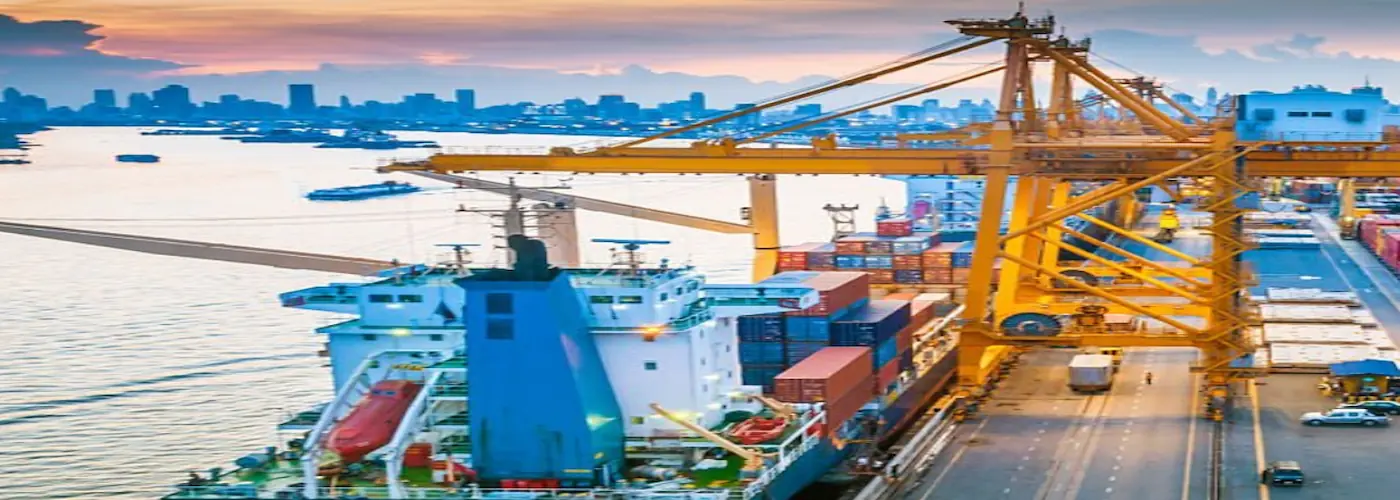
Busan — World Hub for Frozen Pelagic Fish Consolidation to Africa and MENA
Busan (부산) is South Korea's largest port and the world's sixth-largest container port by throughput, handling over 22 million TEUs annually. For frozen pelagic fish buyers in West Africa and MENA, Busan has a commercial function that extends beyond being a Korean export port: it is the primary hub for consolidating mixed-species reefer containers from Northeast Asian supply — Korean and Japanese mackerel, Korean round scad (Decapterus maruadsi), and third-country pelagic staged under Korean cold-store control — into single 40-foot reefer containers destined for Lomé, Abidjan, Lagos, Jeddah or Alexandria. This frozen round scad and mackerel mixed containers korea pattern is commercially unique: no other node in this catalogue combines cold storage capacity, species availability, liner frequency and stevedoring economics at the volumes African and MENA importers actually book.
A typical mixed-species consolidated container from Busan — a 40-foot reefer carrying 26 tonnes net — can contain: 8–10 tonnes of Scomber japonicus BQF 200–300g (Dongwon or Sajo), 6–8 tonnes of Trachurus japonicus IQF WR 200–300g, and 6–8 tonnes of Decapterus maruadsi (round scad) IQF WR. Assembly time at Busan cold stores: 5–7 working days from order confirmation. Each species carries its own Korean MFDS lot certificate and packing list — documented separately within the container so the buyer can clear each species under its correct HS code at destination customs. Global Mackerel coordinates this multi-species consolidation from Busan on request.
| Destination port | From Busan (Korea) | From Japan (Choshi) | From Peru (Callao) |
|---|---|---|---|
| Jeddah, Saudi Arabia | 18–22 days (via Suez) | 20–24 days (via Suez) | 28–34 days (via Suez/Panama) |
| Lomé, Togo | 22–26 days (via Suez) | 24–28 days (via Suez) | 18–22 days (Panama + Atlantic) |
| Lagos / Apapa, Nigeria | 24–28 days (via Suez) | 26–30 days (via Suez) | 20–24 days (Panama + Atlantic) |
| Alexandria, Egypt | 16–20 days (via Suez) | 18–22 days (via Suez) | 26–30 days (via Suez) |
| Rotterdam, Netherlands | 24–28 days (via Suez) | 26–30 days (via Suez) | 24–28 days (Panama + Atlantic) |
| Transit times indicative for reefer container services on regular liner routes. Actual transit varies by carrier and schedule. | |||
Mixed-species container consolidation from Busan — how to order
- → Container size: 40ft reefer standard (26t net payload)
- → Minimum per species: 5 tonnes (approx. 250 cartons × 20kg)
- → Assembly time: 5–7 working days Busan cold stores
- → Documentation: separate MFDS lot certificate per species per lot
- → HS codes: declared separately (0303.54 S. japonicus / 0303.55 T. japonicus / 0303.89 Decapterus)
- → Temperature: continuous −18°C from cold store to vessel
- → Contact Global Mackerel with your species mix and discharge port for a consolidated FOB Busan quote
BQF Frozen Pacific Mackerel 200–500g from Korea — the West Africa and MENA Segment
South Korea's cheap frozen chub mackerel export to west africa from korea segment is driven by Sajo Industries and, to a lesser extent, Dongwon tail-season production. During the Korean fishing season peak (September–December), Scomber japonicus BQF 200–300g is produced at Busan plants in volumes sufficient to compete with Peruvian BQF on CIF West Africa price terms. Two size grades are commercially relevant for West African importers: 200–300g (approx. 4–6 pcs/kg) — the standard African bulk grade, directly comparable to Peruvian BQF; and bqf frozen pacific mackerel 300-500g busan — a Korean-specific advantage, as Peruvian processing cannot reliably deliver this size from Humboldt Current stock. The 300–500g Korean BQF is the correct specification for MENA buyers who want volume pricing but require a larger fish than Peru can consistently supply.
The commercial decision between Korean BQF and Peruvian BQF for African and MENA bulk buyers comes down to four variables that move independently. First, seasonality: Korean BQF is only available August–February, requiring buyers to plan cold store inventory carefully. Peruvian BQF is available year-round. Second, size: Korea can supply 300–500g BQF reliably; Peru cannot. Third, documentation: Korean MFDS certificate with KOREU FTA eligibility is cleaner for EU re-export than Peruvian SANIPES chain. Fourth, price: Peruvian BQF is the global reference price for 200–300g Scomber japonicus bulk — Korean competes but rarely undercuts. Map fat windows with frozen mackerel fat content specification guide.
| Specification | 200–300g grade | 300–500g grade |
|---|---|---|
| pcs/kg equivalent | 4–6 pcs/kg | 2–3 pcs/kg |
| Format | BQF 20kg block · some IQF WR 10–20kg | IQF WR 10–20kg preferred · BQF 20kg available |
| Season available | Sep–Feb peak · Jan–Feb tail competitive | Sep–Dec peak only (less tail stock) |
| Fat content | 8–14% (Sep–Nov peak) · 6–10% (Jan–Feb tail) | 10–18% (Oct–Dec peak) — best fat grade |
| Certification | MFDS + HACCP · KOREU FTA eligible | MFDS + HACCP · KOREU FTA eligible |
| Primary exporter | Sajo · Dongwon tail season | Dongwon · Sajo limited volume |
| Peru available equivalent | Yes — year-round at reference price | No — Peru yields predominantly 200–300g |
frozen Pacific mackerel — Scomber japonicus wholesale supplier
FOB Busan Frozen Mackerel Price — How Korean Prices Compare to Japan and Peru
FOB busan frozen mackerel price per metric ton sits in a defined band inside the global hierarchy for Scomber japonicus. For equivalent specification — same species, same size grade, same fat window — Korean FOB Busan for IQF 300–400g typically prints below parallel Japanese port offers in the same charter month, while remaining above distressed Peruvian BQF on pure dollars-per-tonne for 200–300g bulk. The spread is auction-driven on the Korean side (Busan-area wholesale clearing) and labour-throughput driven on the plant side, not a marketing label. Model yen and won against your invoice currency: offers move when spot FX moves even if fish biology does not.
The practical buying guide from this structure is direct. For buyers who require premium fat-spec IQF 300–400g and will pay for Japanese provenance on the certificate: route through frozen mackerel from Japan — four species FOB guide. For buyers who require the same broad specification at lower landed cost and accept Korean provenance: South Korea — same species, same HACCP class, different competent authority. For buyers who require maximum volume at minimum cost on 200–300g BQF with minimal lipid clauses: Peru year-round or Korea September–February. For buyers who need 300–500g BQF: Korea only — Peru cannot supply this grade reliably. Format definitions stay on frozen mackerel formats — BQF, IQF, WR bulk specifications.
Korea vs Japan row: qualitative spread for equivalent Scomber japonicus IQF 300–400g offers (Below / Lower = Korean FOB typically under Japanese reference). N/A = thin comparable volume. Actuals vary with exchange rates and catch.
MFDS Certification and KOREU FTA — Korean Frozen Mackerel Documentation for EU and US Import
South Korean frozen mackerel exports are certified by the MFDS (식품의약품안전처 — Ministry of Food and Drug Safety), the Korean competent authority for seafood exports. The MFDS health certificate is structurally similar to the Japanese MHLW certificate but is a legally distinct document with different establishment registration numbers and different formatting. Buyers who paste a Japanese MHLW template onto a Korean shipment — or the reverse — risk a customs processing issue at EU BIP or US FDA entry. Each shipment from South Korea requires an MFDS certificate referencing the Korean processing establishment's MFDS registration number — not the exporter's business registration number alone, which is different. This is the operational core of KOREU FTA frozen mackerel EU import programmes: tariff preference rides on correct authority paperwork, not on brand familiarity.
The KOREU FTA (Korea-EU Free Trade Agreement, in force July 2011) eliminates or significantly reduces import duties on frozen fish products from South Korea entering the EU. Frozen Scomber japonicus and Trachurus japonicus (HS 0303.54 and 0303.55) benefit from zero or reduced tariff rates under this agreement, comparable in commercial effect to the EU-Japan EPA preference but issued under a Korean certificate of origin (EUR.1 or Form A) — not the same document as the Japanese EPA certificate. For the US market, the KORUS FTA (Korea-US Free Trade Agreement, 2012) provides preferential access for Korean frozen seafood exports, creating a distinct documentary chain from Peruvian preference programmes. Deep HS sequencing lives in frozen mackerel HS codes and import documentation — full guide.
Korean frozen mackerel — required documents by destination
European Union
- → MFDS EU Health Certificate
- → IUU Catch Certificate (MFDS vessel ref.)
- → EUR.1 or Form A (KOREU FTA preference)
- → Commercial invoice · Packing list · B/L
United States
- → MFDS Health Certificate
- → KORUS FTA Certificate of Origin
- → FDA Prior Notice (≥5 days before arrival)
- → SIMP (Seafood Import Monitoring Program) — if applicable
GCC (UAE, Saudi, Qatar…)
- → MFDS Health Certificate
- → Halal Certificate (OIC-recognised body, lot-specific)
- → Certificate of Origin (legalised)
- → Arabic carton label (net drained weight)
West Africa (bulk)
- → MFDS Health Certificate
- → Certificate of Origin (standard)
- → Halal cert. for Muslim-majority markets
- → Phytosanitary cert. where locally required
Frequently Asked Questions — Frozen Mackerel from South Korea
- What are the main frozen mackerel exporters in South Korea and how do they differ?
- Three operators dominate South Korean frozen mackerel exports. Dongwon Industries is the largest integrated fisheries group, operating its own deep-sea fleet and MFDS-certified Busan processing plants — it supplies both premium IQF 300–500g for MENA and East Asian markets and standard BQF 200–300g for African bulk wholesale. CJ Seafood specialises in value-added formats (marinated chub mackerel retail packs, semi-dried IQF) for the Korean diaspora market in the USA, Canada and Australia, and for Chinese premium retail. Sajo Industries focuses on competitive BQF pricing for West African (Ghana, Nigeria, Côte d'Ivoire) and North African (Egypt, Libya) bulk buyers, competing directly with Peruvian BQF on CIF price terms.
- What is the advantage of sourcing frozen mackerel from Busan vs Japan for mixed-species container buyers?
- Busan is the world's sixth-largest container port and the only origin in this catalogue that enables mixed-species reefer container consolidation — combining Scomber japonicus, Trachurus japonicus and round scad (Decapterus maruadsi) in a single 40-foot reefer container assembled in 5–7 working days. Each species carries its own MFDS lot certificate and is declared under its correct HS code (0303.54, 0303.55, 0303.89) at destination customs. Japanese port consolidation of multiple species from different ports (Choshi, Nagasaki, Kesennuma) requires separate container bookings and typically 2–4 weeks of additional planning. For buyers who want species diversification in a single container at competitive FOB prices, Busan consolidation is structurally superior.
- How does FOB Busan frozen mackerel price compare to FOB Japan and FOB Peru?
- For equivalent Scomber japonicus IQF 300–400g specification, FOB Busan typically prices in a lower band than contemporary Japanese port equivalents (Choshi or Kesennuma) in many tender seasons — reflecting raw-material auction dynamics and higher average plant throughput in Korea versus Japan. Against Peruvian BQF 200–300g, Korean prices at tail-season (January–February) often approach parity — useful for buyers who need Peruvian-style economics but prefer MFDS documentation for EU-connected re-export. For the 300–500g BQF grade, South Korea has no reliable Peruvian parallel — Humboldt landings skew smaller.
- What is the KOREU FTA and how does it affect EU import duties on Korean frozen mackerel?
- The KOREU FTA (Korea-EU Free Trade Agreement, in force July 2011) provides preferential — zero or significantly reduced — import duty rates for frozen fish products from South Korea entering the EU, including frozen Scomber japonicus (HS 0303.54) and Trachurus japonicus (HS 0303.55). To claim this preference, the Korean exporter must provide an EUR.1 movement certificate or Form A (Generalised System of Preferences) issued by Korean customs. The KOREU certificate is a different legal document from the EU-Japan EPA certificate — buyers who have a Japanese EPA template cannot use it for Korean shipments. Confirm with your customs broker that the correct KOREU FTA form is issued at the time of export, before the shipment sails.
South Korea Frozen Mackerel — Related Pages
Ready to source frozen mackerel?
Send your specs and get a competitive quote within 24h.