
Family Carangidae · Humboldt Current · Peru · HS 0303.55

Frozen Jack Mackerel — Trachurus murphyi

Frozen jack mackerel (Trachurus murphyi) — known in Peru and Chile as jurel — is the largest-range Trachurus species on the planet, distributed across the entire South Pacific from the coasts of Peru and Chile to the waters off New Zealand and Australia. With annual FAO landings of 447,000 tonnes, it is the highest-volume Trachurus species in global trade, driven almost entirely by the extraordinary productivity of the Humboldt Current ecosystem off Peru. Unlike any other species on this site, frozen jack mackerel is traded almost exclusively in BQF (Block Quick Frozen) 10kg block format — a structural characteristic of Peruvian processing infrastructure that every buyer must understand before placing their first purchase order. Global Mackerel supplies frozen jack mackerel from Peruvian processing plants certified under HACCP, IFS and BRC and operating within the SPRFMO-managed quota framework, to importers across Sub-Saharan Africa, the Middle East and MENA.

447,000t

#1 Trachurus by FAO landings

BQF

Dominant commercial format

SPRFMO

High-seas quota management

Request a Jack Mackerel Quote
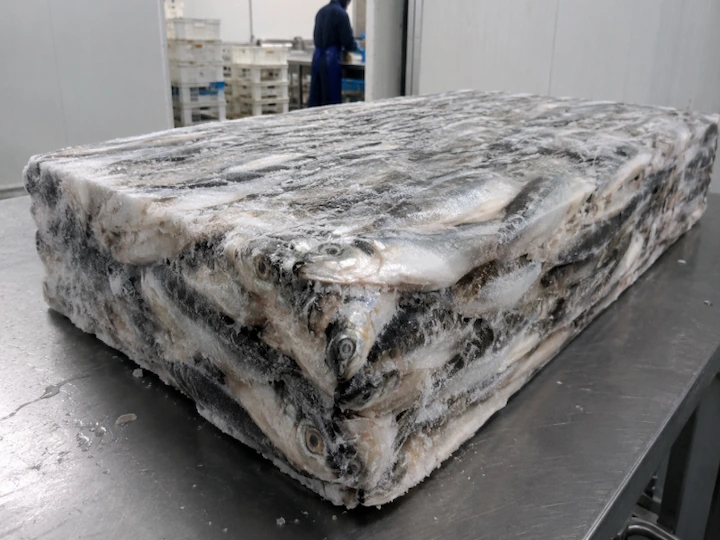
Frozen jack mackerel Trachurus murphyi BQF block 20kg Callao Peru export jurel

Frozen Trachurus murphyi — Callao processing facility, Peru

Trachurus murphyi — The Jurel, the Widest-Range Trachurus and the BQF Block Reality

Trachurus murphyi is the southernmost and widest-ranging member of the genus Trachurus. Its distribution spans the entire South Pacific gyre — from the Peruvian and Chilean coasts westward across the open South Pacific to the waters off New Zealand and Australia — a range that no other Trachurus species approaches. This extraordinary geographic spread reflects the species' evolutionary adaptation to the nutrient-rich cold-water upwelling systems that line the eastern Pacific boundary, combined with its capacity to undertake trans-Pacific migrations of several thousand kilometres. In commercial frozen fish trade, however, Trachurus murphyi is almost entirely synonymous with Peru: approximately 90% of global commercial landings occur in Peruvian and Chilean waters within 500 nautical miles of Callao, making Peru the de facto mono-origin for the global frozen jack mackerel trade.

In Peru and Chile, Trachurus murphyi is universally called jurel — a Spanish name derived from the Catalan sorell (the local name for Atlantic horse mackerel, Trachurus trachurus), which arrived with Spanish colonists in the sixteenth century. The name jurel is used on all Peruvian and Chilean export documents alongside the English trade name “jack mackerel” — and buyers who source from multiple South American suppliers will encounter both names on the same proforma invoice. In MENA markets — particularly Egypt and Turkey — the product is frequently referred to as estafi or simply horse mackerel, creating confusion with both Atlantic horse mackerel (Trachurus trachurus) and cape horse mackerel (Trachurus capensis). Global Mackerel uses frozen jack mackerel (Trachurus murphyi) on all commercial documentation and specifies the HS code 0303.55 and the country of origin Peru to eliminate ambiguity in customs declarations at all destination markets.

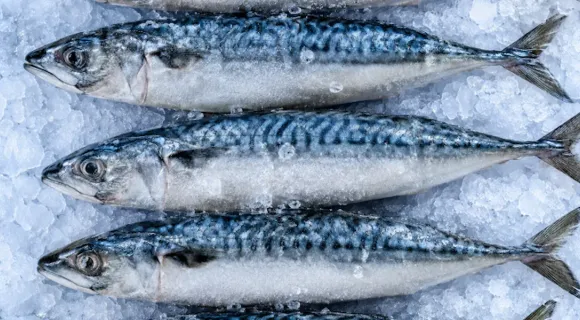
The anatomical identification of Trachurus murphyi in a cold store or at delivery inspection follows the same scute-and-dorsal-fin protocol as all Trachurus species — lateral line scutes from operculum to tail, two clearly separated dorsal fins with a spiny first dorsal. What distinguishes Trachurus murphyi from the other two Trachurus species on this site — trachurus and capensis — is body coloration and market size. Trachurus murphyi at commercial market weight from Peruvian waters typically falls in the 200–350g range, with the dominant traded grade being 200–300g. This is smaller than the 250–450g typical of Namibian Trachurus capensis from the Benguela Current, but explains why the product competes directly in the same 200–300g whole round bulk market segment as Moroccan Trachurus trachurus rather than in the 300–400g premium segment where Benguela cape horse mackerel has its natural advantage. The three-species Trachurus commercial positioning — murphyi (200–300g, Peru), trachurus (100–300g, Morocco), capensis (250–450g, Namibia) — is the most useful sizing framework for buyers deciding which Trachurus origin to source for a specific destination market.

Buyers comparing frozen Chilean jack mackerel against Moroccan or Namibian Trachurus lines should treat the Callao BQF ecosystem as its own procurement lane: forward pricing for frozen jack mackerel reflects plate-freezer throughput and anchoveta competition more than glaze debates common on Scomber pages. When a tender asks for “horse mackerel Peru,” verifying that the offer is frozen jack mackerel (Trachurus murphyi) rather than a mislabelled consignment protects margin on every container.
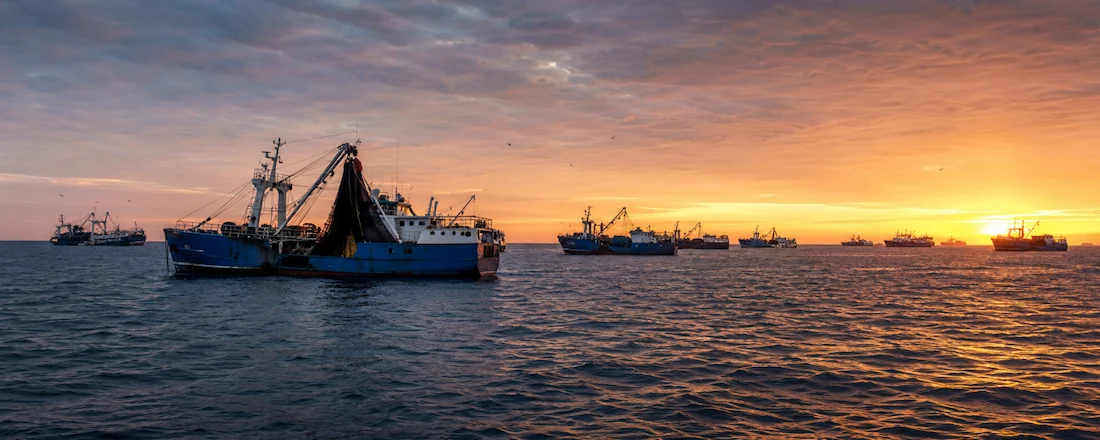
Humboldt Current Peru fishing fleet jack mackerel Trachurus murphyi SPRFMO zone
Humboldt Current fishing zone — Trachurus murphyi, SPRFMO-regulated, Peru

El Niño, La Niña and the ENSO Cycle — The Climate Risk Every Jack Mackerel Buyer Must Understand

The single greatest supply risk in frozen jack mackerel procurement is not quota politics, not processing capacity, not freight costs — it is the El Niño–Southern Oscillation (ENSO) cycle. ENSO is a recurring climate pattern in the tropical Pacific that alternates between two phases: El Niño (warm phase) and La Niña (cool phase). Its effects on the Humboldt Current upwelling system off Peru are dramatic and directly determine whether frozen jack mackerel is abundant, expensive and readily available — or scarce, expensive and contracted months in advance.

During La Niña years, cold Pacific trade winds intensify, driving stronger-than-normal Humboldt Current upwelling along the Peruvian coast. Cold, nutrient-rich water rises to the surface in exceptional volumes, fuelling phytoplankton blooms that support dense zooplankton populations — the base of the food chain that ultimately feeds large Trachurus murphyi schools within 300–500 nautical miles of Callao. La Niña years produce the largest frozen jack mackerel catches, the lowest CIF prices and the most reliable supply chain for importers. Processing plants run at full capacity, cold stores fill, and the global frozen jack mackerel market is a buyer's market.

El Niño years are the opposite in every dimension. When El Niño develops, warm equatorial Pacific water displaces the cold Humboldt Current southward and toward the surface, suppressing the upwelling that drives the entire food chain. Sea surface temperatures off Callao rise by 3–7°C above normal — from the typical 15–18°C of neutral conditions to 22–25°C. At these temperatures, the phytoplankton blooms that sustain the Trachurus murphyi food chain collapse. Jack mackerel schools migrate south and west in search of colder water, moving beyond the practical range of the Peruvian coastal fleet. Catch volumes fall sharply — El Niño events in 1997–98 and 2015–16 each produced approximately 40–60% reductions in Peruvian frozen jack mackerel landings from the preceding La Niña peaks. CIF prices spike. Buyers who had not forward-contracted during La Niña conditions found themselves competing for scarce supply at prices 30–50% above their budget assumptions.

ENSO Impact on Jack Mackerel Supply

La Niña (cool phase)

High Supply volume
Buyer's market
  • Water temp: 15–18°C (normal)
  • Upwelling: strong · Prey: abundant
  • Price trend: → stable / declining
  • Strategy: forward-contract volumes

Neutral (ENSO-neutral)

Normal Supply volume
Balanced market
  • Water temp: 16–20°C
  • Upwelling: moderate
  • Price trend: → stable
  • Strategy: standard procurement

El Niño (warm phase)

Low Supply volume
Seller's market
  • Water temp: 22–25°C (+7°C)
  • Upwelling: suppressed · Prey: collapsed
  • Price impact: +30–50% vs La Niña
  • Strategy: secure contracts early

ENSO phase forecasts are published 6–9 months in advance by NOAA and SENAMHI (Peru). Global Mackerel monitors ENSO outlooks and advises buyers on forward-contracting strategy.

The practical procurement implication is this: buyers who source frozen jack mackerel on a spot basis — purchasing container by container as needed without forward contracts — are systematically exposed to El Niño price spikes that can destroy their procurement budget for a category that represents a significant line item in their cost of goods. The buyers who manage this risk successfully do so by monitoring ENSO forecasts — published 6–9 months in advance by NOAA (US National Oceanic and Atmospheric Administration) and SENAMHI (Peru's national meteorology and hydrology service) — and forward-contracting frozen jack mackerel volumes at La Niña pricing before the transition to El Niño conditions reduces supply. For current frozen jack mackerel price data and ENSO-adjusted supply outlook, see our frozen mackerel price per ton updated monthly.

IMARPE, PRODUCE & SPRFMO — Three Regulators, One Supply Chain

Frozen jack mackerel from Peru operates within the most complex multi-layer fisheries regulatory framework of any species on this site. Three separate regulatory bodies govern different aspects of the same supply chain, and buyers who do not understand how they interact risk sourcing product from vessels or processors operating outside legitimate quota allocations — a compliance exposure that has real consequences at EU, US and Japanese customs.

IMARPE

Instituto del Mar del Perú

Peru's marine research institute, IMARPE conducts the annual biomass surveys and stock assessments that determine the scientifically recommended catch levels for Trachurus murphyi in Peruvian waters. IMARPE's stock assessment model uses hydroacoustic surveys — echo-sounder transects across the main Humboldt Current fishing grounds — combined with trawl sampling to estimate total biomass. The IMARPE recommendation is the scientific input to the government quota decision; it is not the quota itself, and the Ministry of Production (PRODUCE) may set a higher or lower TAC than IMARPE recommends based on economic and political considerations.

PRODUCE

Ministry of Production, Peru

Peru's Ministry of Production sets the annual total allowable catch (TAC) for Trachurus murphyi in Peruvian waters and divides the fishing year into two seasons — typically a first season running January–July and a second season running August–December, with an inter-season closure of several weeks. PRODUCE announces season opening and quota volumes with approximately 2–4 weeks notice, which creates short-window procurement opportunities and risks that sophisticated buyers track actively. When PRODUCE announces a season opening with a large TAC allocation, CIF prices typically soften within 2–3 weeks as processing plants begin filling orders. When the TAC is announced as lower than expected — which occurs in pre-El Niño years when IMARPE's stock assessment shows reduced biomass — prices spike immediately.

SPRFMO

South Pacific Regional Fisheries Mgmt Organisation

SPRFMO manages the high-seas component of the Trachurus murphyi stock — the portion of the population that migrates beyond any national EEZ into international waters of the South Pacific. SPRFMO was established specifically because unregulated high-seas fishing for frozen jack mackerel by fleets from China, Russia, South Korea and Poland was depleting the transboundary stock beyond what Peru and Chile's EEZ-based management could sustain. At its peak in the early 2000s, the high-seas frozen jack mackerel catch exceeded 3 million tonnes annually — more than six times current levels — driven by distant-water trawler fleets operating without quota restrictions in international waters. The stock collapsed to approximately 7% of its estimated unfished biomass by 2012, prompting the creation of SPRFMO with binding catch limits for all member-state fleets.

IUU Fishing Risk — Due Diligence for Jack Mackerel Buyers

The history of IUU (Illegal, Unreported, Unregulated) fishing in the South Pacific frozen jack mackerel fishery is the reason SPRFMO exists. Buyers who source frozen jack mackerel from non-SPRFMO-registered vessels or from processing plants that cannot provide vessel registration documentation face compliance exposure in the EU (IUU Regulation 1005/2008 requires catch certificates for all imported fish), Japan (similar catch documentation requirements) and the US (SIMP — Seafood Import Monitoring Program — requires supply chain documentation for all covered species). Global Mackerel sources frozen jack mackerel exclusively from PRODUCE-licensed Peruvian processors with complete catch certificate chains traceable to SPRFMO-registered vessels. We provide full IUU compliance documentation packages on request.

View certification and compliance documentation →

Why Frozen Jack Mackerel Is BQF Block — Not IQF

Every other Trachurus species on this site is available in IQF whole round format as the primary commercial specification. Frozen jack mackerel from Peru is the exception: the dominant commercial format — accounting for approximately 70–80% of Peruvian frozen jack mackerel produced for export — is BQF block, specifically 10kg solid block frozen in rectangular moulds. Understanding why this is the case is not a technical footnote — it determines pack configuration, thawing procedures, processing line requirements and carton dimensions for buyers who are switching from IQF Atlantic or cape horse mackerel to Peruvian frozen jack mackerel for the first time.

The BQF dominance reflects the structure of Peruvian processing infrastructure, which was built for volume throughput rather than individual fish quality optimisation. The Peruvian pelagic processing industry developed primarily around fishmeal and fish oil production for the anchovy (Engraulis ringens) — an industry that operates at scales of tens of thousands of tonnes per day during peak seasons. When processing plants configured for anchoveta fishmeal production were adapted to freeze catches into frozen jack mackerel for human consumption in the 1980s and 1990s, they adopted the fastest, lowest-capital-cost freezing technology available at the time: vertical plate freezers that produce 10kg solid blocks. IQF tunnel freezers — which are the standard technology for premium individual fish freezing in Norwegian and Japanese plants — require significantly higher capital investment per tonne of throughput and are less suited to the volume-first processing philosophy of the Callao industrial fishing district.

For buyers, the BQF block format creates four specific operational requirements that IQF product does not. First, thawing procedure: a 10kg solid block of frozen jack mackerel cannot be partially used — once the block begins to thaw, the entire 10kg must be processed to completion within the food safety time window for the defrost temperature. Buyers who use whole round frozen jack mackerel in retail or foodservice applications where individual portion control matters must plan thawing schedules around full-block cycles. Second, processing line configuration: industrial processors who break BQF blocks for filleting require block-breaking equipment not needed for IQF product. Third, carton dimensions: BQF blocks in 10kg format stack differently from IQF 20kg bulk cartons — buyers who are accustomed to Atlantic horse mackerel in 20kg cartons will find that the pallet configuration and container loading pattern for Peruvian frozen jack mackerel BQF blocks requires adjustment. Fourth, net weight verification: in BQF blocks, net weight includes the ice interstitial between frozen fish bodies — buyers should specify and verify net weight (excluding ice) separately from gross frozen block weight in purchase orders. Global Mackerel provides BQF block technical specifications on request for buyers setting up their first Peruvian frozen jack mackerel processing line.

Dominant format — Peru

BQF Block — 10kg

  • ✓ 70–80% of Peruvian frozen jack mackerel exports
  • ✓ Lowest cost per tonne — maximum throughput
  • ✓ Stable during long-haul transit to Africa/MENA
  • ✗ Full block must be thawed and used at once
  • ✗ Block-breaking equipment required for processing
  • ✗ Net weight includes interstitial ice — verify on PO
Premium format — limited availability

IQF Whole Round — 10kg

  • ✓ Individual fish — portion flexibility
  • ✓ No block-breaking equipment required
  • ✓ Premium quality — faster freeze-through
  • ✗ Available from limited Callao processors only
  • ✗ 15–20% price premium over BQF equivalent
  • ✗ Shorter availability windows — seasonal

Procurement teams that blend frozen Chilean jack mackerel with other Callao pelagic programmes should document whether each lot is plate-frozen BQF or tunnel IQF before negotiating discharge rates, because stevedore handling times differ materially between blocks and shatter-prone IQF cartons. That operational split is unique to how frozen jack mackerel moves through Peruvian cold chains compared with other Trachurus programmes worldwide.

The Anchovy Competition — How Engraulis ringens Disrupts Jack Mackerel Supply

Every buyer of frozen jack mackerel from Peru operates in the shadow of a species they are not buying: Engraulis ringens, the Peruvian anchovy (anchoveta). Anchoveta fishmeal and fish oil — produced from the same fish that sustains the same Humboldt Current ecosystem as Trachurus murphyi — is one of the most valuable commodity exports in Peruvian economic history. At peak production, Peru's anchoveta fishery produces 5–7 million tonnes per year of raw fish, generating a fishmeal and fish oil industry that is structurally dominant over all other uses of Peruvian marine processing capacity. When the anchoveta season opens and the quota is large, the overwhelming majority of Peru's pelagic processing industry capacity — the freezing lines, the cold stores, the vessel schedules, the port logistics at Callao and Chimbote — pivots to anchoveta. Frozen jack mackerel production becomes, by operational necessity, secondary.

The seasonal calendar for Peruvian fishing has two main windows for anchoveta: a first season typically running April–July and a second season running November–January. These windows partially overlap with the two PRODUCE-approved frozen jack mackerel seasons, creating recurring periods in which the same processing infrastructure is contested between fishmeal producers and human-consumption frozen jack mackerel buyers. During strong anchoveta seasons — when the PRODUCE quota is large and anchoveta ex-vessel prices are high — fishmeal margins significantly exceed frozen jack mackerel processing margins, and plant operators shift capacity allocation accordingly. Buyers who have contracted forward delivery of frozen jack mackerel in an anchoveta peak window occasionally experience delayed production, substituted specifications or requests to renegotiate contract timing. This is not bad faith on the supplier's part — it is the economic logic of dual-species processing infrastructure responding to real-time margin signals.

The practical procurement response is counter-intuitive: the best time to contract frozen jack mackerel for forward delivery is during the anchoveta season — not after it. When plants are focused on anchoveta fishmeal, they are receptive to frozen jack mackerel forward contracts at competitive prices because the frozen jack mackerel forward price locks in margin certainty for the post-anchoveta window when their fishmeal lines will be idle. Buyers who wait until after the anchoveta season ends to place frozen jack mackerel orders compete for processing capacity with every other importer who had the same idea simultaneously — creating a rush-to-contract dynamic that pushes spot prices up for 4–6 weeks after each anchoveta season close. For current production availability and forward pricing that accounts for the anchoveta calendar, see our frozen mackerel price per ton updated monthly.

Jan
Feb
Mar
Apr
May
Jun
Jul
Aug
Sep
Oct
Nov
Dec
Anchoveta season
Open
Open
Peak
Peak
Peak
Open
Peak
Peak
Jack mackerel season
Open
Open
Peak
Constrained
Constrained
Constrained
Open
Peak
Peak
Peak
Constrained
Constrained
Anchoveta peak — processing capacity constrained Jack mackerel peak — full capacity available Overlap / mixed season

Vessel skippers landing mixed catches of Trachurus murphyi sometimes queue behind anchoveta offload barges at Callao; that berth priority is a physical constraint on how quickly frozen jack mackerel enters the plate freezer queue even when quotas remain open. Treat berth sequencing as part of your frozen Chilean jack mackerel lead-time model, not as a footnote to generic reefer scheduling.

Histamine Risk at Callao — What Tropical Port Conditions Mean for Food Safety

Trachurus murphyi is a scombroid-family adjacent species and, like all Trachurus, is subject to histamine formation from free histidine in the muscle tissue following capture. Histamine production is temperature-dependent and accelerates rapidly above 10°C — which creates a specific food safety management challenge at Callao that does not apply with the same intensity to Norwegian Atlantic mackerel processing (ambient temperatures in Ålesund in October: 5–10°C) or Namibian cape horse mackerel processing (Walvis Bay ambient: 15–22°C, mitigated by the Benguela cold water).

Callao's port district sits at sea level on the Peruvian coast, where ambient temperatures range from 15°C (austral winter, June–September) to 26°C (austral summer, January–March). During the austral summer — which overlaps with Peru's second frozen jack mackerel fishing season — ambient temperatures at Callao dockside can reach 24–26°C. At these temperatures, unrefrigerated or improperly cooled frozen jack mackerel raw-fish temperatures can climb from 12–15°C (the typical RSW tank holding temperature on Peruvian coastal vessels) to above 20°C within 2–4 hours of unloading at the quayside if RSW management fails or if vessels experience delays at the dock before offloading. At 20°C, histamine-producing bacteria (primarily Morganella morganii and Hafnia alvei) can raise histamine levels in Trachurus muscle from near-zero to above the EU regulatory limit of 100mg/kg in less than 6 hours — a food safety failure that occurs before the fish ever reaches the freezing line.

Experienced Peruvian processors who supply export markets with strict histamine controls — the EU, Japan, the US — manage this risk through a specific protocol chain: RSW tanks maintained at −1°C to 0°C; dockside unloading within maximum 2-hour windows during hot season; mandatory raw material histamine screening on each vessel's catch before processing line entry, using rapid enzymatic test kits with 30-minute results; and immediate rejection of batches exceeding 30mg/kg incoming raw material (well below the 100mg/kg EU limit on finished product, to allow a safety margin for the processing and freezing steps). Buyers sourcing frozen jack mackerel for the EU, Japan or the US should specifically request evidence of raw material histamine testing protocols from their supplier as part of standard due diligence — not just the finished product certificate of analysis. Global Mackerel provides raw material histamine testing documentation as standard for all EU, Japanese and US-destined frozen jack mackerel shipments. For the full food safety and histamine regulatory framework across mackerel species and destination markets, see our frozen mackerel histamine regulations guide.

The CIF Lomé Triple Arbitrage — Jack Mackerel vs Horse Mackerel vs Pacific Mackerel

In the West African bulk frozen fish import market — CIF Lomé, CIF Cotonou, CIF Lagos — frozen jack mackerel from Peru competes simultaneously with two other species on this site: frozen Atlantic horse mackerel (Trachurus trachurus) from Morocco and frozen Pacific mackerel (Scomber japonicus) from Peru itself. All three products target the same buyer, the same end consumer, and the same price point. The buyer who calls Global Mackerel from Lagos asking for a CIF Lagos indication for 200–300g whole round frozen fish may ultimately purchase any of the three — and experienced traders on both sides of this transaction know that the decision will be made on landed cost per kilogram, not on species preference or nutritional profile.

CIF West Africa comparison — frozen jack mackerel vs horse mackerel vs Pacific mackerel
Parameter Frozen Jack Mackerel Frozen Horse Mackerel Frozen Pacific Mackerel
Scientific name Trachurus murphyi Trachurus trachurus Scomber japonicus
Origin Peru (Callao) Morocco (Agadir) Peru (Callao)
HS code 0303.55 0303.55 0303.54
Primary format BQF block 10kg WR 20kg carton BQF block / WR
Size grade (W. Africa) 200–300g WR equivalent 200–300g WR 200–300g WR
Transit to Lomé 18–22 days 7–10 days 18–22 days
Fat content 6–12% 4–12% 10–15%
Price relative Reference +/− 0–5% vs jack +/− 0–8% vs jack
Key price driver ENSO + PRODUCE quota Morocco quota + EUR Peru chub quota + El Niño

The price comparison in the table above is inherently dynamic — the three-way differential between Trachurus murphyi, Trachurus trachurus and Scomber japonicus on CIF Lomé terms fluctuates week by week based on independent variables in three different fisheries. The 7–10 day transit advantage of Moroccan horse mackerel over both Peruvian species means that Moroccan product always loads faster and arrives sooner — which matters for buyers with urgent fill requirements. But the transit cost is baked into the CIF price: when the Moroccan horse mackerel CIF price is more than approximately $25–40 per tonne above the Peruvian products on a comparable grade, the transit advantage is no longer commercially decisive and buyers switch. Frozen jack mackerel and Pacific mackerel from the same Peruvian port compete with each other on pure price differential — a buyer who was quoted both species in the same email from Global Mackerel may select the cheaper specification on the day, and switch back to the other in the next order cycle.

The most commercially astute buyers in West African frozen fish import maintain standing relationships with suppliers for all three species simultaneously, and make their order decision on the basis of current CIF indications rather than species preference. Global Mackerel can supply frozen jack mackerel, frozen Atlantic horse mackerel and frozen Pacific mackerel from the same documentation package with simultaneous CIF indications to the same West African port — a capability that gives buyers in Ghana, Nigeria, Benin and DRC the best possible basis for making value-optimised sourcing decisions. For current price differentials across all three species on CIF West Africa terms, see our frozen mackerel price per ton updated monthly.

Humboldt Current cold upwelling zone off Peru coast Trachurus murphyi fishing grounds

Humboldt Current upwelling zone — Peruvian fishing grounds for Trachurus murphyi

Callao port Peru frozen jack mackerel processing and export facility

Callao port — Peru's primary frozen fish export hub

Quick Reference — Formats, HS Code & Certifications

Full specifications are available on dedicated pages — linked below. This section provides concise reference data only.

Available Formats

  • BQF block 10kg — dominant — all Callao plants
  • IQF WR 10kg — premium — selected plants
  • WR 20kg bulk carton — limited availability
  • Size grades: 200–300g · 300–350g

Full specifications →

HS Classification

0303.55

Trachurus spp. EU IUU catch certificate required. SPRFMO vessel registration documentation on request.

Full HS and compliance guide →

Certifications

✓ HACCP ✓ IFS ✓ BRC ✓ EU Health Cert ✓ PRODUCE Licensed ✓ SPRFMO Compliant

Halal on request. SIMP-compliant documentation for US imports available.

SPRFMO Vessel Registration, SENASA Certification and the IUU Compliance Chain for Frozen Jack Mackerel

Frozen jack mackerel from Peru requires the most complex IUU compliance documentation chain of any species on this site — a direct consequence of the South Pacific fishery's history of unregulated high-seas fishing that led to the creation of SPRFMO. The EU IUU Regulation 1005/2008 requires a catch certificate for all frozen fish imported into the EU, and for Trachurus murphyi specifically, EU border inspection posts are trained to verify that the SPRFMO vessel registration number of the catching vessel appears on the catch certificate — not merely the Peruvian PRODUCE fishing licence. These are two separate registration systems: a vessel can hold a valid PRODUCE licence for domestic EEZ fishing without being registered with SPRFMO for high-seas operations. EU customs authorities have detained consignments of frozen jack mackerel where the catch certificate referenced only the PRODUCE licence without the corresponding SPRFMO vessel record. Buyers who source for EU re-export must specifically request the SPRFMO vessel registration screenshot from their Peruvian supplier and verify it against the SPRFMO vessel monitoring system (VMS) register — a public database available on the SPRFMO website — before the vessel sails.

SENASA (Servicio Nacional de Sanidad Agraria) is Peru's national food safety authority and the competent authority that issues health certificates for frozen jack mackerel exported from Peru. The SENASA health certificate for frozen Trachurus murphyi references the SENASA-registered processing plant approval number — which must appear on the EU-approved list of Peruvian fish processing establishments published in the Official Journal of the EU. Not all SENASA-registered Peruvian plants are on the EU-approved list; some process for domestic consumption or for non-EU export markets only. Buyers who source frozen jack mackerel for EU-destined shipments must confirm that their Peruvian supplier's processing plant is on the current EU-approved list before placing their order. The EU list is updated periodically and plants can be added or removed; a plant that was EU-approved at your last order may not be at your next order if it failed an EU audit in the interim. Global Mackerel maintains a live record of EU-approved Peruvian Trachurus murphyi processing establishments and updates buyers when changes occur.

The US SIMP (Seafood Import Monitoring Program) applies to Trachurus murphyi imported into the United States and requires importers to submit harvest and supply chain data through the NOAA ACE system at the time of import. The data required includes: species (scientific name Trachurus murphyi), product form, quantity and weight, harvest location (FAO area and SPRFMO statistical area), name and flag of the harvesting vessel, identification of the harvesting vessel, and RFMO authorisation. For frozen jack mackerel sourced through Peruvian processing intermediaries — where the catching vessel and the processing plant are different commercial entities — the chain of custody between vessel and plant must be documented to satisfy SIMP traceability requirements. This is an area where informal Peruvian trading structures, where brokers aggregate catches from multiple vessels without clear chain-of-custody documentation, create compliance risks for US importers. Global Mackerel provides SIMP-ready documentation packages for all US-destined frozen jack mackerel shipments, including vessel-to-plant chain of custody documentation as standard.

The interstitial ice verification challenge in frozen jack mackerel BQF blocks deserves specific attention in the context of trade documentation because it creates a recurring discrepancy between contracted weight and landed weight that is, strictly speaking, a documentation issue rather than a quality issue. A 10kg BQF block of frozen jack mackerel contains approximately 1.2–1.8kg of interstitial ice depending on the plate freezer dwell time and block mould configuration at the Callao plant. This means a standard 20-carton pallet of 10kg BQF blocks contains approximately 24–36kg of ice in addition to the fish. Purchase orders that specify weight in gross frozen block weight will show higher weight at origin than at destination after the blocks have been thawed for processing — a discrepancy that appears to be a weight shortage but is in fact the expected ice loss. The correct commercial practice is to specify net fish weight on the purchase order, invoice and bill of lading — and to cross-reference the net weight against the processing yield report at destination. Global Mackerel specifies net fish weight separately from gross block weight on all frozen jack mackerel documentation and provides block thaw yield test reports for buyers who need to calibrate their receiving procedures.

Frequently Asked Questions — Frozen Jack Mackerel

How does El Niño affect frozen jack mackerel supply and prices from Peru?
El Niño warms the Humboldt Current by 3–7°C above normal, suppressing the cold-water upwelling that sustains Trachurus murphyi prey populations. Jack mackerel schools migrate south and west, beyond the practical range of Peru's coastal fleet. El Niño events have produced 40–60% reductions in Peruvian frozen jack mackerel landings from preceding La Niña peaks, with CIF prices rising 30–50% in the most severe events. ENSO phase forecasts are available 6–9 months in advance from NOAA and Peru's SENAMHI. Buyers should forward-contract frozen jack mackerel volumes during La Niña conditions — when prices are competitive — rather than waiting for El Niño shortfalls to drive procurement.
Why is most frozen jack mackerel from Peru in BQF block format rather than IQF?
Peruvian processing infrastructure was built primarily for anchoveta fishmeal production using vertical plate freezers — the technology that produces 10kg BQF blocks. IQF tunnel freezers, which produce individual free-flowing fish, require higher capital investment and lower throughput and were not widely adopted by Peruvian pelagic processors. The BQF block format has implications for buyers: full blocks must be thawed and used at once, block-breaking equipment is required for processing lines, and net weight must be specified separately from gross block weight in purchase orders to account for interstitial ice. IQF frozen jack mackerel is available from selected Callao processors at a 15–20% price premium.
What is SPRFMO and why does it matter for buyers of frozen jack mackerel?
SPRFMO — the South Pacific Regional Fisheries Management Organisation — manages the high-seas component of the Trachurus murphyi stock in international waters of the South Pacific. It was created specifically because unregulated high-seas high-seas frozen jack mackerel fishing in the 2000s depleted the stock to approximately 7% of its estimated unfished biomass. EU Regulation 1005/2008 requires catch certificates for all fish imported to the EU, and EU authorities verify that frozen jack mackerel was caught by SPRFMO-registered vessels. US SIMP (Seafood Import Monitoring Program) has equivalent documentation requirements. Buyers in the EU, Japan and the US must ensure their supplier can provide full SPRFMO vessel registration and catch certificate chains.
When should I buy frozen jack mackerel to avoid the anchoveta processing competition?
Peru's anchoveta fishing seasons typically run April–July (first season) and November–January (second season). During these windows, Callao processing plants allocate the majority of their freezing capacity to fishmeal production, constraining frozen jack mackerel availability and sometimes delaying forward-contracted production. The best procurement windows for frozen jack mackerel are: August–October (between anchoveta seasons) and February–March (post-second-season gap before first anchoveta season opens). Counter-intuitively, placing forward contracts during anchoveta peak season secures better pricing and delivery certainty than waiting to order spot once anchoveta season closes.

Ready to source frozen mackerel?

Send your specs and get a competitive quote within 24h.