
Family Carangidae · Benguela Current · Namibia & South Africa
Frozen Cape Horse Mackerel — Trachurus capensis
Frozen cape horse mackerel (Trachurus capensis) is the Benguela Current species — caught exclusively in the cold upwelling waters off Namibia and South Africa, processed under the Marine Resources Act at land-based facilities in Walvis Bay and Lüderitz, and traded primarily into East and Southern African, Middle Eastern and Eastern European markets. With annual FAO landings of 357,000 tonnes, Trachurus capensis is the largest Trachurus species by Southeast Atlantic catch volume, yet it remains commercially underexposed outside its primary trade routes. This relative obscurity is the opportunity: a high-volume, quota-managed, HACCP-certified frozen Carangidae product priced against a market that has not yet fully globalised its buyer base. Global Mackerel supplies frozen cape horse mackerel whole round IQF in 250–450g grades from Walvis Bay year-round to buyers in East Africa, MENA and Eastern Europe.
357,000t
#1 Southeast Atlantic Trachurus
Benguela
Cold upwelling — 8–14°C
250–450g
Larger than Atlantic horse mackerel
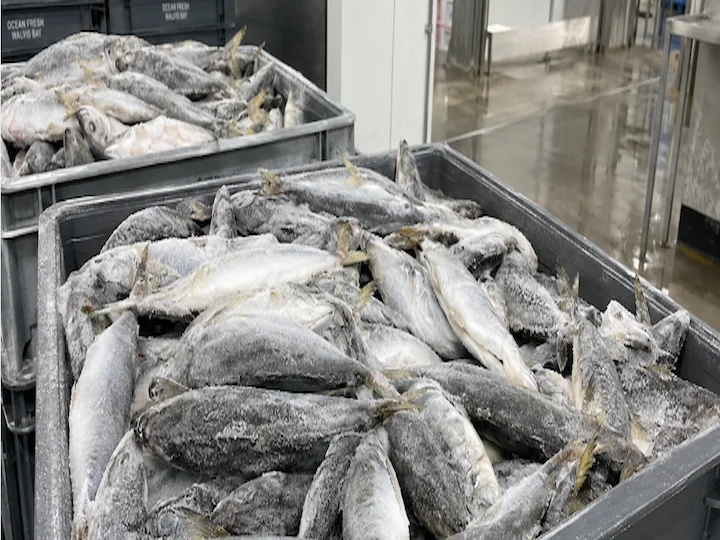
Frozen Trachurus capensis — Walvis Bay processing facility, Namibia
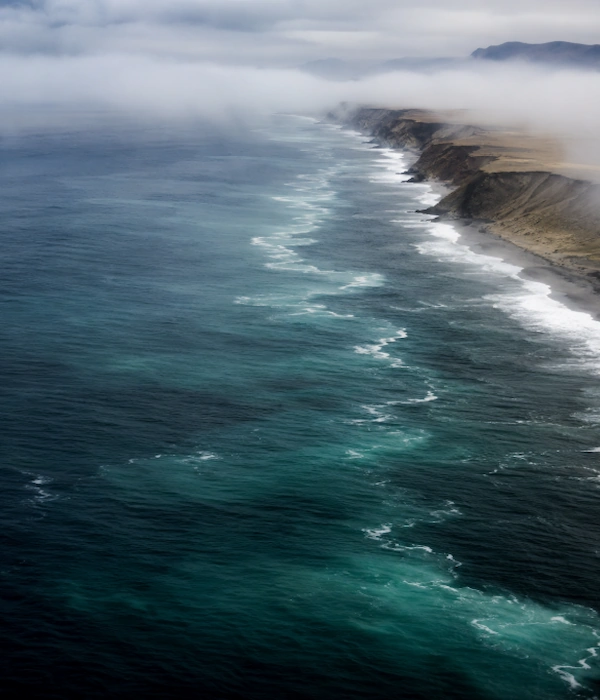
The Benguela Current — Why Trachurus capensis Grows Larger Than Any Other Horse Mackerel
The Benguela Current is the cold-water upwelling system that runs northward along the Atlantic coast of southern Africa from the Cape of Good Hope to southern Angola. It is one of the four major eastern boundary upwelling systems in the world ocean — alongside the Humboldt Current (Peru/Chile), the California Current (USA) and the Canary Current (northwest Africa). The upwelling mechanism is identical in each system: prevailing southerly winds push warm surface water offshore, drawing cold, nutrient-saturated water up from depths of 200–400 metres. In the Benguela, this cold upwelled water — typically 8–14°C in the main Namibian fishing grounds off Lüderitz and Walvis Bay — carries dissolved nitrates, phosphates and silicates at concentrations that support phytoplankton blooms of exceptional density. These blooms sustain the zooplankton and schooling fish populations that make the Benguela one of the most productive marine fishing zones in the world by biomass per square kilometre.
The direct commercial consequence of the Benguela's productivity for buyers of frozen cape horse mackerel is body size. Trachurus capensis in Namibian waters has access to prey — primarily euphausiid krill, copepods and small pelagic fish — in quantities that Trachurus trachurus in Moroccan coastal waters, which fishes in a less productive upwelling system, does not. The result: commercial frozen cape horse mackerel from the Namibian Benguela runs predominantly in the 250–450g range at market weight, with a significant proportion of 300–400g fish during the peak austral autumn season (March–May). Moroccan Atlantic horse mackerel from the same genus runs predominantly 100–300g. This 100–150g average body weight advantage is not merely a size statistic — it translates directly into a different market segment. Trachurus capensis competes in the 300–400g specification market occupied by Northeast Atlantic Trachurus trachurus from Dutch and Spanish processors, at volumes and price points that these Northern European origins cannot match year-round.
The Benguela also creates a specific fat content profile for Trachurus capensis that differs from other Trachurus origins. The cold upwelling water — with its stable low temperature regardless of season — maintains consistent prey availability year-round, preventing the extreme post-spawning lean phase that characterises Moroccan Trachurus trachurus. Frozen cape horse mackerel fat content ranges from 6% (austral winter trough, July–August) to 14% (austral autumn peak, March–May) — a narrower annual swing than any other Trachurus origin, producing a product with more predictable specification consistency across the procurement year. For buyers who specify minimum fat content on Carangidae — Eastern European processors producing smoked product, for example — this consistency is a procurement planning advantage that makes Namibian frozen cape horse mackerel preferable to the more variable Moroccan specification.
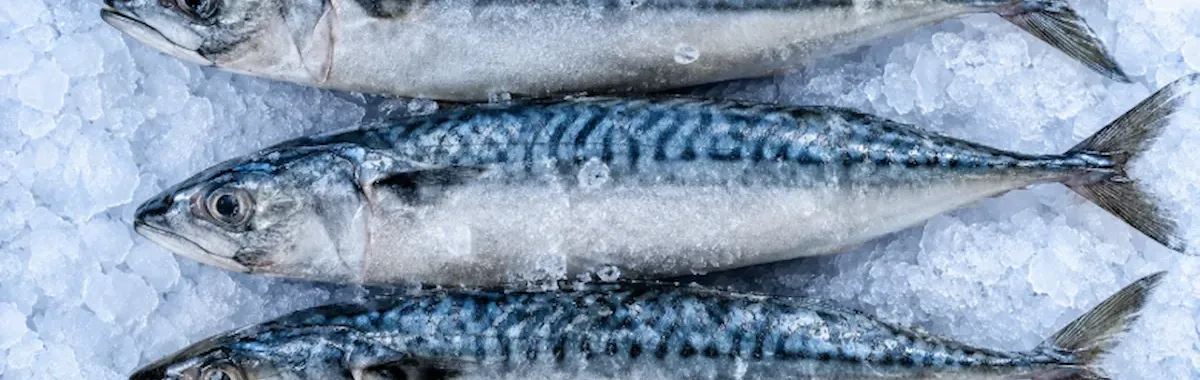
Trachurus capensis vs Trachurus trachurus — The 84 Scutes That Change the Processing Yield
Trachurus capensis and Trachurus trachurus are anatomically similar but measurably different in the one feature that defines the genus: the lateral line scutes. Trachurus capensis carries approximately 72–84 keeled bony scutes along its lateral line, compared to 69–79 in Trachurus trachurus. This difference of 5–8 scutes per fish is not cosmetically significant — both species look and feel essentially identical to non-specialists at delivery inspection — but it has a precise consequence in industrial processing operations that fillet or skin the fish: the higher scute count in Trachurus capensis means a slightly longer mechanical descuting or hand-trimming pass on processing lines calibrated for Trachurus trachurus. Processing plants in Eastern Europe that have run Trachurus trachurus from Morocco for years and then switch to Trachurus capensis from Namibia without adjusting their line settings experience a 1.5–3% yield drop on the first runs, until operators recalibrate blade positions and conveyor speeds to account for the denser scute sequence.
The second anatomically unique characteristic of Trachurus capensis in trade is its body depth. Frozen cape horse mackerel is proportionally deeper-bodied than Atlantic horse mackerel at equivalent length — a consequence of the higher nutritional density of the Benguela feeding grounds producing fish with more muscle mass per unit length. This deeper body cross-section means that Trachurus capensis at 300g body weight presents more fillet surface area than Trachurus trachurus at 300g — approximately 8–12% more edible flesh per fish at equivalent market weight. For buyers purchasing for filleting and further processing, this yield advantage partially compensates for the additional scute handling time and makes the cost-per-kilogram-of-fillet calculation more competitive than the headline whole fish price differential suggests.
Trachurus capensis
Benguela Current
- Scute count: ~72–84 per fish
- Body weight (commercial): 250–450g
- Body depth: deeper (more muscle mass)
- Fillet yield advantage: +8–12% vs trachurus at same weight
- Processing adjustment required: YES — scute count recalibration
Trachurus trachurus
Atlantic / Morocco
- Scute count: ~69–79 per fish
- Body weight (commercial): 100–300g (Morocco)
- Body depth: shallower
- Fillet yield: reference baseline
- Processing lines calibrated for this species by default
Processing plants switching from Trachurus trachurus to Trachurus capensis should recalibrate descuting lines on first runs. Contact Global Mackerel for technical processing specifications.
Namibianisation — The Law That Controls Every Cape Horse Mackerel Export
Every kilogram of frozen cape horse mackerel that leaves Namibia passed through a legal framework that most of its buyers have never heard of: the Marine Resources Act and the Namibianisation policy of the Ministry of Fisheries and Marine Resources (MFMR). Understanding Namibianisation is not optional background knowledge — it determines the product format available, explains why Namibian frozen cape horse mackerel is NOT FAS (Frozen At Sea) product, and governs the certification chain from catch to carton.
The Marine Resources Act — Fish Must Be Processed in Namibia
Namibia's Marine Resources Act establishes that all marine resources in Namibian waters are the property of the Namibian State, managed in the national interest. The Act's Namibianisation provisions require quota holders — the fishing companies licensed to catch frozen cape horse mackerel in the Namibian EEZ — to operate processing facilities within Namibia employing Namibian citizens. Foreign vessels may fish in Namibian waters under joint venture arrangements, but the catch must be landed and processed in Namibia. This provision explicitly prevents the FAS model that operates in Mauritanian waters under EU bilateral access agreements, where EU-flagged vessels catch and freeze fish at sea and land the product in EU or third-country ports.
What Namibianisation Means for Product Quality — The RSW Window
Because processing must occur at Namibian land-based facilities, all frozen cape horse mackerel from Namibia spends time in RSW (Refrigerated Sea Water) chilled holds between capture and the freezing line. RSW tanks maintain the catch at approximately 0°C to −1°C, slowing but not stopping the enzymatic and microbial activity that begins at the moment of capture. The time window between hauling the net and the fish entering the plate freezer at the Walvis Bay or Lüderitz plant is typically 12–36 hours for vessels fishing inshore grounds, and 36–72 hours for vessels working the deeper offshore Benguela grounds. This RSW window is actively managed under HACCP protocols that include mandatory histamine testing on RSW-held raw material before processing — a step that filters out batches where histamine formation has exceeded acceptable levels before they enter the frozen product chain. Buyers who equate 'not FAS' with 'lower quality' misunderstand how modern RSW management works: HACCP-controlled RSW product from Walvis Bay consistently produces histamine levels well within EU, Japanese and US regulatory limits.
Walvis Bay — The Only Deep-Water Port Between Cape Town and Luanda
Walvis Bay is Namibia's primary processing and export hub for frozen cape horse mackerel. It is the only natural deep-water harbour on the Namibian coast — capable of accommodating vessels of 200m+ length without tide dependency — and handles approximately 80% of Namibia's pelagic fish exports. Processing facilities in Walvis Bay have a combined cold storage capacity of approximately 40,000 tonnes and operate continuous two-shift freezing lines during the main fishing season. Transit times from Walvis Bay: Mombasa 12–16 days; Dar es Salaam 14–18 days; Jeddah 18–22 days; Rotterdam 20–24 days; Lagos 14–18 days. These transit times are structurally competitive for East African and MENA markets and are covered by standard reefer container services on the South Africa / East Africa / Middle East lanes operated by MSC, Maersk and CMA CGM. Full Namibia origin details →
The Namibian Quota — Predictability vs Norwegian Uncertainty
Namibia allocates cape horse mackerel fishing quotas annually under the Marine Resources Act through the MFMR, with total allowable catch (TAC) set from annual stock assessments. Historical annual TAC has ranged from 280,000 to 420,000 tonnes. Quotas are announced in December for the following calendar year, giving buyers a 12-month supply planning window. This contrasts sharply with the Northeast Atlantic mackerel quota — where the dispute between Norway, Iceland, the Faroe Islands and the EU creates annual uncertainty that regularly disrupts contracted supply volumes. For buyers who have experienced Norwegian Atlantic mackerel supply shortfalls due to quota disputes — covered in detail on our Atlantic mackerel quota crisis page — Namibian frozen cape horse mackerel represents a structurally more predictable supply chain for the Carangidae category.
South Africa as Secondary Origin — DAFF Certification and Eastern Cape Production
South Africa operates a smaller frozen cape horse mackerel fishery, primarily in the waters off the Cape Peninsula and the Eastern Cape coast. South African processing is concentrated in Port Elizabeth (Gqeberha) and Cape Town, under DAFF (Department of Agriculture, Forestry and Fisheries) export certification — a framework that predates Namibia's EU-recognised certification and that some buyers with specific EU import requirements prefer. South African-origin frozen cape horse mackerel is available in smaller volumes than Namibian product, typically 50,000–80,000 tonnes annually, and commands a modest quality premium in Eastern European and Middle Eastern markets where South African food safety credentials are better known. Buyers who specifically require South African origin — for country-of-origin labelling, for SADC tariff preference in specific markets, or for DAFF certification rather than MFMR certification — should specify this at order placement.
Maasbanker — The Afrikaans Name That Loses Sales in Arab Markets
In South African domestic trade, Trachurus capensis is universally sold as maasbanker — a name of Dutch origin that arrived with the settlers of the Cape Colony and has been in continuous local use for over two centuries. The etymology traces to the Dutch words maas (mesh — as in the mesh of a fishing net) and bank (shoal or sandbank — the shallow-water habitat where the species was historically caught by inshore netters near Cape Town). The name is as natural to South African seafood traders as keta school boys is to Ghanaian importers or saba to Japanese buyers. South African fishing companies print it on their cartons, their invoices, their website headers. It is their product identity.
The commercial problem is precise: maasbanker is almost completely unknown outside southern Africa. A buyer in Cairo, Istanbul, Dubai or Warsaw who receives a proforma invoice listing frozen maasbanker WR 300–400g has no context for what they are being offered. They cannot look it up easily — search results for maasbanker return South African recreational fishing sites, restaurant menus, and Afrikaans Wikipedia. The name creates an unnecessary friction at exactly the moment when a buyer is evaluating an unfamiliar origin for the first time. In Arab-speaking markets where English is already a second negotiating language, an unfamiliar Afrikaans compound noun as the product name introduces a layer of confusion that experienced traders do not want to manage at the beginning of a new commercial relationship. Global Mackerel uses frozen cape horse mackerel (Trachurus capensis) on all export documentation.
A separate naming confusion affects buyers in East African markets — particularly Kenya, Tanzania and Mozambique — where both Trachurus capensis from Namibia and Decapterus species from Indian Ocean fisheries are sold under the generic Swahili term samaki wa barafu (frozen fish) or the loose commercial name makrizi. Decapterus russelli (Indian scad) and Decapterus macarellus (mackerel scad) are entirely different genera from entirely different ocean systems, with different fat content profiles (3–7%), different texture and different price points — typically lower than Trachurus capensis from Namibia. Buyers who are quoted 'horse mackerel' or 'makrizi' by East African distributors should always verify the scientific name on the import documentation to confirm they are receiving Trachurus capensis rather than a Decapterus substitute. For species-specific documentation distinguishing Trachurus capensis from Decapterus species, Global Mackerel provides scientific name identification on all commercial invoices and health certificates as standard. See our frozen mackerel import and trade guide for full documentation guidance.
Why Frozen Cape Horse Mackerel Goes East — Not West
Frozen cape horse mackerel from Namibia follows a geographic trade pattern that is the direct inverse of frozen Atlantic horse mackerel from Morocco. Understanding why requires knowing three things about shipping routes, SADC tariff structures and competition from Indian Ocean species. This section covers the commercial logic that no other page on this site addresses for Trachurus capensis specifically.
East & Southern Africa
Three structural factors give Namibian frozen cape horse mackerel a durable competitive advantage in East and Southern African markets. First, transit: Walvis Bay to Mombasa is 12–16 days — 8–10 days less than the equivalent journey from Morocco or Norway via the Cape of Good Hope. Lower transit days means lower freight costs and fresher product on arrival. Second, SADC tariffs: the Southern African Development Community free trade area reduces or eliminates import duties on seafood products traded between member states — a tariff preference that applies to Namibian and South African origin product entering Kenya, Tanzania, Mozambique, Zimbabwe and Zambia that Northern Hemisphere origins cannot access. For landlocked SADC markets — Zimbabwe, Zambia — this tariff advantage compounds with the routing advantage through Durban or Beira ports to produce the lowest landed cost of any frozen Carangidae origin for these markets. Third, volume: Namibia's 357,000-tonne annual catch provides the volume consistency that East African institutional buyers — government fish distribution programmes, large supermarket chains, mass catering operators — require for year-round supply commitments.
West Africa — Why It Doesn't Work
The routing from Walvis Bay to West African ports — Lomé, Cotonou, Lagos, Tema — covers approximately 4,500–5,500 nautical miles northward along the African coast, adding 10–14 transit days compared to Moroccan origins on the same routes. For frozen horse mackerel in the 200–300g whole round bulk segment — where the price differential between suppliers is measured in $20–40 per tonne — an additional 12 days of reefer container freight cost eliminates the margin advantage that Namibian product might otherwise hold. Moroccan Trachurus trachurus, loading from Agadir or Tan-Tan, reaches Lomé in 7–10 days. Namibian Trachurus capensis from Walvis Bay requires 18–22 days to the same port. This routing asymmetry is structural and permanent — it does not change with fuel prices or container rates. West African buyers who enquire about frozen cape horse mackerel should calculate the CIF differential versus Moroccan horse mackerel on the same route before contracting Namibian product.
The Benguela Fat Content Cycle — Month-by-Month Buying Guide
The fat content of Trachurus capensis follows the austral seasonal cycle of the Benguela upwelling — not the Northern Hemisphere calendar that governs Atlantic and Pacific mackerel fat content. The Benguela upwelling reaches its maximum intensity in austral spring and early summer (September–February), driving peak phytoplankton and zooplankton biomass. Cape horse mackerel feeding on this prey accumulate fat progressively from October through March, reaching their annual peak in March–May before the austral autumn cooling. The fat trough occurs in July–August when upwelling weakens and spawning-related energy expenditure depletes reserves.
Approximate fat content (% wet weight, Soxhlet method) — Trachurus capensis, Namibian Benguela stock — indicative monthly values
The practical buying guide derived from this calendar is specific. Buyers who specify minimum fat content on frozen cape horse mackerel — Eastern European processors producing smoked product, MENA operators producing marinated fillets — should contract production from February–April catches, when Trachurus capensis is building toward its March–May fat content peak and pre-shipment lab tests will confirm specifications in the 10–14% range. Buyers who do not specify fat content — Sub-Saharan African bulk buyers, institutional purchasers — can buy year-round from cold storage without seasonal preference, as the fat content difference between 6% (August) and 14% (April) does not affect the product's acceptability in whole round grilled or fried applications. Pre-shipment fat content test reports by Soxhlet method are available from Global Mackerel on request for any shipment. For a full cross-species fat content dataset including comparisons with Trachurus trachurus from Morocco, see our frozen mackerel fat content specification guide.
Walvis Bay — Namibia's deep-water fishing port and the processing hub for all Trachurus capensis exports
Quick Reference — Formats, HS Code & Certifications
Full specifications are on dedicated pages — linked below. This card provides concise reference data only.
Available Formats
- WR — 20kg bulk carton — Namibia & SA
- IQF WR — 10kg carton — Namibia
- H&G — 10kg/20kg — selected Walvis Bay plants
- Size grades: 200–300g · 300–400g · 400g+
Full specifications →
HS Classification
0303.55
Trachurus spp. SADC trade agreements may reduce import duties in member states — verify with customs broker.
Certifications
Quota-managed under Marine Resources Act (Namibia). Stock status: monitored by MFMR annual assessment.
MFMR Export Documentation and SADC Tariff Preferences — What Makes Namibian Trachurus capensis Unique in Trade Finance
Namibian frozen cape horse mackerel leaves Walvis Bay under a documentation stack issued by the Ministry of Fisheries and Marine Resources (MFMR) — a government authority that combines the functions of fishing quota management, processing plant registration, and export health certification in a single ministry. This unified regulatory structure means that the MFMR export health certificate for Trachurus capensis references the quota holder's licence number, the registered processing establishment's MFMR approval number, and the catch batch identifier — all on the same document. Buyers who import Namibian frozen cape horse mackerel into the EU, Japan or the US receive a single competent authority certificate that satisfies catch certificate, health certificate and establishment registration requirements simultaneously, rather than the multi-document chains that some other origins require.
The SADC (Southern African Development Community) tariff preference is the most commercially underutilised advantage in frozen cape horse mackerel procurement for East African buyers. SADC's free trade area protocol reduces import duties on fish products traded between member states — and for buyers importing into Kenya, Tanzania, Mozambique, Zimbabwe or Zambia, Namibian origin frozen cape horse mackerel qualifies for preferential tariff treatment that Norwegian, Moroccan or Peruvian origins cannot access. To claim the SADC preference, the buyer needs a SADC certificate of origin issued by the Namibian Ministry of Industrialisation, Trade and SME Development — a separate document from the MFMR health certificate, which must be requested from the Namibian exporter at order placement. SADC certificates cannot be backdated or reconstructed after the shipment has sailed; the request must be made before production. The tariff saving varies by SADC member state and product category but typically ranges from 5–25% of CIF value — on a containerised shipment of frozen cape horse mackerel, this can represent $500–2,500 in duty saving per container that goes directly to the buyer's landed cost.
South African frozen cape horse mackerel carries DAFF (Department of Agriculture, Forestry and Fisheries) export health certification — the same competent authority that certifies Australian frozen blue mackerel — which gives it a documentation profile that is familiar to EU, Japanese and US importers who already handle Australian seafood products. South African DAFF certification is recognised under the EU-South Africa Trade, Development and Cooperation Agreement (TDCA), which provides a preferential import duty framework for South African seafood entering the EU that is distinct from the standard Most Favoured Nation duty rate. Buyers who source South African frozen cape horse mackerel for EU-destined re-export should verify the applicable TDCA duty rate with their customs broker before contracting, as the preference margin over the MFN rate can be commercially significant on high-volume contracts.
A practical note on the MFMR batch code and its role in cold store rotation at destination. Every batch of frozen cape horse mackerel that passes through Walvis Bay is assigned an MFMR batch identifier that ties the frozen product to the specific RSW intake log, the raw material histamine test result, the plate freezer run time and the cold storage entry date. This batch code appears on the outer master carton label as a six or seven-digit alphanumeric. Cold store managers at destination who receive Trachurus capensis from multiple production dates should segregate and rotate by MFMR batch code — not by container arrival date — to ensure that older production is distributed before newer production in FIFO (first-in, first-out) sequence. The MFMR batch code is also the reference that Global Mackerel uses to trace any quality claim on a specific shipment back to the original Walvis Bay production record. Buyers who file quality claims without the MFMR batch code from the carton label create avoidable delays in claim resolution.
Frequently Asked Questions — Frozen Cape Horse Mackerel
- Why does Trachurus capensis from Namibia run larger than Atlantic horse mackerel from Morocco?
- The Benguela Current upwelling off Namibia delivers cold, nutrient-rich water year-round that supports prey populations — euphausiid krill, copepods, small pelagics — at densities that the Moroccan coastal fishing grounds cannot match. This exceptional feeding environment enables Trachurus capensis to grow to 250–450g commercial weight, compared to the 100–300g typical of Moroccan Trachurus trachurus. The Benguela's stable cold-water temperature (8–14°C year-round in the main fishing grounds) also prevents the extreme seasonal variation that limits prey availability in more temperate Moroccan coastal waters.
- What is Namibianisation and why does it mean Namibian cape horse mackerel is NOT frozen at sea?
- Namibianisation refers to provisions in Namibia's Marine Resources Act requiring that fish caught in Namibian waters be processed at land-based facilities in Namibia, employing Namibian citizens. This prevents the FAS (Frozen At Sea) model used by EU vessels in Mauritanian waters, where fish is frozen on board within hours of capture. Namibian cape horse mackerel is held in RSW (Refrigerated Sea Water) tanks at 0°C to −1°C for 12–72 hours between capture and processing at Walvis Bay or Lüderitz plants — a chilled hold window managed under HACCP protocols including mandatory histamine testing on incoming raw material before processing.
- Why do processing plants need to recalibrate their lines when switching from Trachurus trachurus to Trachurus capensis?
- Trachurus capensis carries approximately 72–84 lateral line scutes per fish compared to 69–79 in Trachurus trachurus. Processing lines calibrated for the Atlantic horse mackerel scute sequence — blade positions, conveyor speeds — need recalibration for the denser Trachurus capensis scute sequence in descuting and skinning operations. Plants that do not recalibrate typically experience a 1.5–3% yield drop on first runs before operators adjust settings. Additionally, Trachurus capensis is proportionally deeper-bodied at equivalent weight than Trachurus trachurus, producing approximately 8–12% more fillet yield per fish — a net positive that partially compensates for the recalibration cost.
- What is the Decapterus competition in East African markets and how should buyers evaluate it?
- In Kenya, Tanzania and Mozambique, Trachurus capensis from Namibia competes with Decapterus russelli (Indian scad) and Decapterus macarellus (mackerel scad) from Indian Ocean fisheries in Oman, Yemen and India. These Decapterus species are different genera from Trachurus, with lower fat content (3–7%), different texture and typically lower CIF prices on Mombasa terms by $80–150 per tonne. Buyers supplying East African markets should evaluate both options based on their end-consumer specification and price sensitivity. Always request scientific name and HS code on documentation — Decapterus species are HS 0303.89, distinct from Trachurus capensis at HS 0303.55. Global Mackerel can provide simultaneous CIF indications for both species.
Ready to source frozen mackerel?
Send your specs and get a competitive quote within 24h.