
FAO Zone 34 · Trachurus trachurus · FAS sea frozen · Nouadhibou · EU SFPA vessels
Frozen Horse Mackerel from Mauritania — Trachurus trachurus Sea Frozen at Source
Mauritania is the only origin on this site where the commercial lane we describe for bulk frozen horse mackerel Mauritania is built around FAS production — FAS frozen horse mackerel packed on EU-flagged factory vessels inside the Mauritanian EEZ, with core freeze completed before any land-based processing line. That single fact drives both the biochemical story (histamine margin) and the logistics story (Nouadhibou sits closest to West African demand). Global Mackerel sources sea frozen horse mackerel bulk wholesale programmes in BQF 20kg and IQF WR packs from SFPA-licensed pelagic fleets targeting Trachurus trachurus in frozen horse mackerel FAO zone 34, for buyers who specify frozen horse mackerel whole round 200-300g or frozen horse mackerel BQF 20kg and need a complete IUU chain from catching event to discharge. If your search string is buy frozen horse mackerel bulk Mauritania or frozen Trachurus trachurus Mauritania supplier, you are already optimising for the Nouadhibou radius — we document why that radius wins on calendar days, not slogans.
For species-level specs and pack photography, keep frozen horse mackerel — Trachurus trachurus supplier open beside this origin note. When you are ready to name flag state, route (A/B/C) and certificate bundle, use request a Mauritanian horse mackerel quote so logistics and compliance see the same line items.
Production
100% FAS — sea frozen
Primary format
BQF 20kg · IQF WR
Hub port
Nouadhibou
Nouadhibou — Why Mauritania Is the Closest Bulk Horse Mackerel Origin to West Africa
Nouadhibou sits near 20°55'N on Mauritania's Atlantic coast, at the tip of Cap Blanc — the westernmost shoulder of the African continent before Senegal's coastal bulge. That position makes it the geographically closest major frozen-fish export pivot to the entire West African import arc. For buyers in Dakar, Abidjan, Tema, Cotonou or Lagos who move frozen horse mackerel FAS bulk wholesale in 40-foot reefers, the origin choice changes sea days, bunker burn and the number of transshipment touches before your cold store receives sealed cartons. Nouadhibou frozen fish exporter programmes shorten those sea days versus Mediterranean or North Sea reloads because the cargo starts almost on top of the demand curve — a structural freight advantage that survives commodity price swings.
| Destination port | From Nouadhibou (Mauritania) | From Agadir (Morocco) | From NE Atlantic (Netherlands) |
|---|---|---|---|
| Dakar, Senegal | 480 nm · 2–3 days | 1,050 nm · 4–5 days | 3,800 nm · 14–17 days |
| Abidjan, Côte d'Ivoire | 1,450 nm · 6–8 days | 2,100 nm · 9–11 days | 4,500 nm · 16–19 days |
| Tema, Ghana | 1,700 nm · 7–9 days | 2,350 nm · 10–12 days | 4,800 nm · 17–20 days |
| Cotonou, Benin | 1,900 nm · 8–10 days | 2,550 nm · 11–13 days | 5,000 nm · 18–21 days |
| Lagos / Apapa, Nigeria | 2,000 nm · 8–10 days | 2,700 nm · 11–14 days | 5,200 nm · 19–22 days |
| nm = nautical miles. Transit times are indicative for reefer container services via regular liner routes. Direct FAS vessel delivery (Route C) may be faster for large volumes. | |||
Every additional sea day between production and your destination cold store is one less distribution day inside a 6–9 month working window, even though label shelf life may read 18–24 months at −18°C. A Lagos buyer who nominates Nouadhibou instead of a North Sea reload often recovers roughly ten to twelve calendar days per round-trip — a full extra rotation of selling days across a twelve-container annual programme. That is why FAS frozen fish manufacturer West Africa sourcing language shows up in serious tenders: the manufacturer is the vessel, and the factory gate is the quay in Mauritania or the ship's rail if you take Route C.
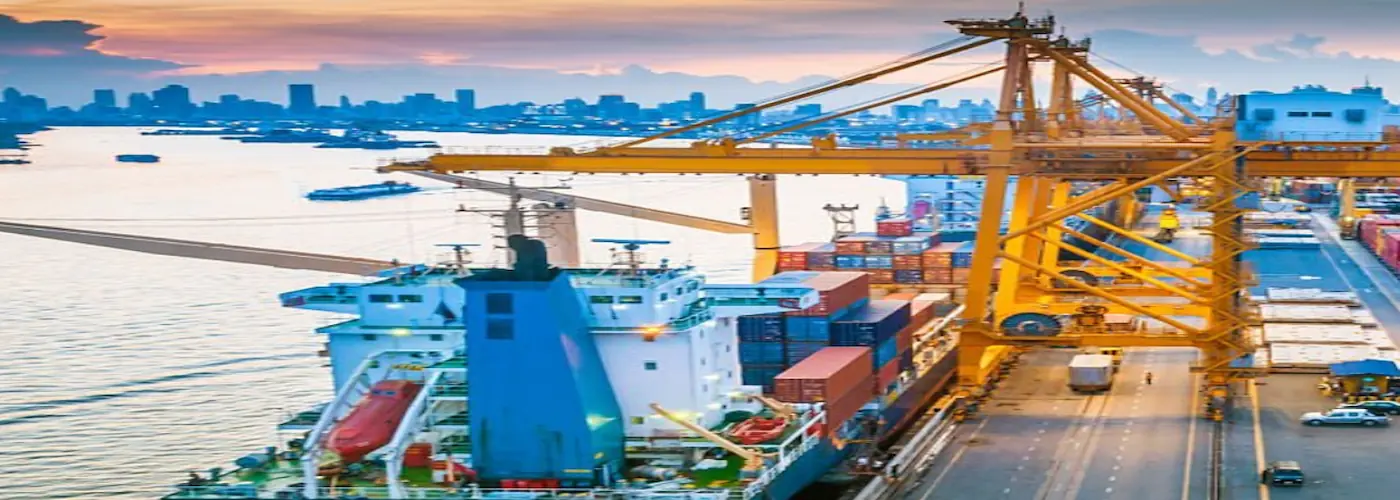
The EU–Mauritania SFPA — Who Fishes, What They Catch and What It Means for Bulk Buyers
The EU–Mauritania Sustainable Fisheries Partnership Agreement is among the world's largest bilateral access packages by authorised catch volume. Under successive protocols — typically renegotiated on a multi-year rhythm — the European Union pays Mauritania annual financial compensation (historically in the order of tens of millions of euros per year across protocol vintages) in exchange for regulated access for EU-flagged fleets inside the Mauritanian EEZ. The agreement spans several licensing categories; for Trachurus trachurus bulk buyers, the operative slice is the pelagic factory-vessel segment with quota ceilings, onboard observer coverage rules, landing obligations and crewing minima that include Mauritanian seafarers on participating vessels. That is the legal backbone behind EU bilateral fishing Mauritania horse mackerel claims on certificates — not an informal flag convenience.
The member states most visible in the pelagic SFPA footprint are Spain, the Netherlands, Ireland and Lithuania. Spanish factory trawlers contribute the largest landed volume; Dutch pelagic units are often associated with high-discipline plate-freezing routines valued by buyers who audit time–temperature curves. Irish and Lithuanian operators fill mid-capacity niches. Separately, other distant-water states may fish adjacent waters under different bilateral tracks — their documentation, VMS footprint and buyer warranties do not automatically match the EU SFPA bundle. When a tender demands frozen horse mackerel sea frozen manufacturers with EU traceability, verify the catching company's flag state and protocol year on the catch certificate before you compare prices with non-EU offers.
Every EU vessel working under the SFPA must report catches to IMROP through VMS and logbook channels. Those declarations are the bridge between commercial tonnage and the scientific advice that feeds CECAF working groups for FAO major area 34. Buyers who need more than a generic sustainability paragraph should request IMROP-referenced declaration lines alongside EU flag-state catch paperwork — Global Mackerel can align those references with your audit questionnaire.
| Parameter | Detail |
|---|---|
| Agreement type | EU Sustainable Fisheries Partnership Agreement (SFPA) — bilateral, renewable |
| Financial compensation | Historically €59–85 million/year paid by EU to Mauritania (protocol-dependent) |
| EU nations operating | Spain (largest) · Netherlands · Ireland · Lithuania |
| Target species (pelagic) | Trachurus trachurus · Scomber scombrus · Sardinella spp. |
| Stock management | IMROP + CECAF / FAO zone 34 |
| Catch documentation | EU flag-state catch certificate (vessel) + Mauritanian re-export cert. (if transshipped) |
| Freezing method | FAS — plate freezer on board, 2–6h from capture to −18°C core |
Why FAS Mauritanian Horse Mackerel Has the Lowest Histamine of Any Bulk Origin — The Sea-Frozen Advantage
Histamine accumulation in Trachurus trachurus muscle begins immediately post-capture and accelerates once surface temperature stays above roughly ten degrees Celsius. Bacterial and endogenous enzyme pathways convert free histidine into histamine; the curve steepens in warm holds. RSW at around zero degrees slows the reaction but does not freeze the clock — long RSW residence before shore freezing is why many land plants publish aggressive intake-to-freeze KPIs. At −18°C core on board, the chemistry effectively stops: a well-run plate-freezer line that pulls Trachurus trachurus from seine or trawl catch through brine or plate contact within a few hours preserves histamine near the capture baseline. That is the technical reason buyers who face Japan-style customer limits or US FDA fish and fishery products hurdles gravitate toward FAS frozen horse mackerel ex Mauritania rather than mixed-origin shore packs when the tender allows the budget.
Laboratory distributions on commercial shipments illustrate the margin: well-run EU FAS lines on Mauritanian grounds frequently cluster in the low- to mid-teens mg/kg or below on pre-shipment checks, whereas shore-frozen lots that saw extended temperate handling before factory entry can arrive legally inside EU limits for Trachurus yet consume most of the safety band before your domestic cold chain adds its own variance. The regulatory ceiling is not the same as the commercial comfort zone — tenders for sensitive channels therefore specify both maximum mg/kg and the sampling standard. Tie those clauses to the route and flag state you select in Section 4 so a certificate from the wrong leg of the journey cannot satisfy a stricter customer form.
Specifying FAS Mauritanian horse mackerel in your purchase order
- → Species: Trachurus trachurus — not "horse mackerel" alone
- → Freezing method: FAS (Frozen At Sea) — specify explicitly, not vague "sea frozen" shorthand
- → Size grade: g/piece (e.g. 200–300g WR) or pcs/kg (e.g. 4–6 pcs/kg)
- → Format: BQF 20kg block or IQF WR 10–20kg loose — state which
- → Histamine: if required, state maximum mg/kg and attach sampling method + laboratory accreditation
- → Documentation route: Route A, B or C — see following section
frozen mackerel histamine control and food safety — full guide
Three Routes to Market — How FAS Sea-Frozen Horse Mackerel Moves from Mauritanian Waters to Your Port
FAS horse mackerel caught in the Mauritanian EEZ by EU pelagic vessels reaches importers through three distinct documentary and logistics routes. The route choice sets the certificate bundle, the typical transit time, the import duty context at destination and how hard your compliance team must work to reconstruct catch-to-landing traceability. Name the required route in the purchase order — not after loading.
Transshipment Nouadhibou → Mauritanian re-export documentation
The EU factory vessel discharges frozen cargo into Nouadhibou cold stores for onward nomination. Re-export then travels under Mauritanian health and origin paperwork valued by many West African and MENA clearing agents because the last export jurisdiction is Mauritania. EU destination imports still require traceability back to the catching vessel under IUU rules — the Mauritanian re-export certificate alone is not a substitute for the EU flag-state catch certificate. Build both into your data room before finance approves margin.
Best for
West Africa · MENA · non-EU buyers
Additional delay
3–7 days vs direct
Documentation
Mauritanian cert. + EU vessel catch doc.
EU port discharge → EU health certificate → re-export
The factory vessel lands in Las Palmas, Vigo, Bremerhaven or another approved EU pelagic port, where the flag-state competent authority issues the EU health certificate recognised worldwide. Re-export from that hub uses the standard EU certificate chain, which many Japanese and premium MENA buyers already template in their vendor manuals. Third-party halal certification, where needed, is often simpler to schedule alongside EU port survey windows. Trade-off: extra sea miles and days versus Route A, which shows up in finance models as carrying cost even when nominal FOB looks similar.
Best for
EU import · Japan · premium MENA · halal requirement
Additional delay
10–18 days vs Route A
Documentation
EU health cert. · EU catch cert. · EUR.1
Direct at-sea transfer to reefer cargo vessel → West Africa
Factory vessels transfer frozen blocks or pallets directly to refrigerated ocean carriers at anchorage or alongside, and those reefers sail straight to West African discharge ports without a mid-continent cold-store leg. This is the leanest time path for high-volume FAS frozen horse mackerel West Africa programmes and the pattern many sea frozen mackerel Nouadhibou supplier tenders reference when they ask for ship-to-ship continuity. Documentation is lighter on paper volume but heavier on discipline: every lashing, barge movement and temperature log must still point to the same catching event ID.
Best for
High-volume W. Africa · bulk BQF · cost-optimised
Additional delay
Fastest route — no intermediate port
Documentation
Vessel catch doc. + transfer record + IMROP ref.
IUU documentation — the one document buyers regularly miss
For EU imports via Route A: receiving only the Mauritanian re-export certificate is insufficient. EU Regulation 1005/2008 requires traceability to the catching vessel, not just the last port of export. Always request the original EU vessel catch document alongside the Mauritanian re-export certificate — both at order placement, not after loading.
IMROP Stock Management — Mauritanian Trachurus trachurus vs the Northeast Atlantic MSC Dispute
The Trachurus trachurus aggregated in Mauritanian waters for SFPA fisheries is assessed within the Eastern Central Atlantic science and management circuit — IMROP national surveys and advice threads feeding CECAF under FAO major area 34. That is not the same assessment pathway as Northeast Atlantic horse mackerel indices prepared by ICES for northern European waters. Buyers who must answer NGO questionnaires should therefore cite the correct ocean basin: Mauritanian Trachurus trachurus is the same species but a different management geography from the ICES-tracked Northeast Atlantic complex tied to high-profile quota politics. Sustainability objections framed around Norwegian or Icelandic pelagic headlines do not copy-paste onto a Nouadhibou FAS dossier without new evidence.
CECAF working groups periodically summarise Eastern Central Atlantic horse mackerel status using IMROP inputs; the tone of those summaries differs from the ICES narrative because the data stack and fleet mix differ. For written policies, link IMROP annual reports and the relevant CECAF stock assessment excerpts — see FAO fisheries documentation portal for authoritative downloads. Global Mackerel can bundle IMROP-referenced catch declaration extracts with your shipment file when auditors ask for IMROP certified mackerel-style traceability language, provided the underlying vessel declarations support the claim.
Sustainability documentation for Mauritanian horse mackerel buyers
- → Stock reference: FAO zone 34 — Eastern Central Atlantic — IMROP + CECAF advice loop
- → Not the ICES Northeast Atlantic storyline: map objections to the correct management body
- → ESG file: IMROP catch declaration + CECAF excerpt + EU vessel VMS summary where permitted
- → SFPA compliance: bilateral access with financial compensation — regulated entry, not unilateral free-for-all
- → Request IMROP-referenced supplementary documentation from Global Mackerel if required for audits
Frequently Asked Questions — Frozen Horse Mackerel from Mauritania
- What does FAS mean for frozen horse mackerel from Mauritania and why does it matter for bulk buyers?
- FAS means Frozen At Sea — the horse mackerel is frozen on board the EU pelagic factory vessel within 2–6 hours of capture, reaching a core temperature of −18°C before any land processing. This produces the lowest histamine levels of any bulk horse mackerel origin — typically 5–15 mg/kg on well-managed EU vessels, versus 15–40 mg/kg for shore-processed product from the same fishing ground. For bulk wholesale buyers exporting to markets with histamine controls (EU maximum 100 mg/kg for Trachurus, Japan, USA 50 mg/kg FDA threshold), FAS Mauritanian horse mackerel provides the widest safety margin and lowest rejection risk of any available origin.
- What is the fastest route to ship frozen horse mackerel from Mauritania to West Africa?
- Route C — direct at-sea transfer from the EU factory vessel to a refrigerated cargo vessel, delivering directly to West African discharge ports — is the fastest route. Nouadhibou to Dakar takes 2–3 days; to Abidjan 6–8 days; to Lagos 8–10 days. These transit times are 2–5 days shorter than equivalent Moroccan origin product and 10–12 days shorter than Northeast Atlantic origin. For bulk wholesale buyers in West Africa on tight inventory cycles, the geographic proximity of Mauritania to the West African coastline is a structural cost advantage that does not change with market conditions.
- What documentation is required to import Mauritanian FAS horse mackerel into the EU?
- EU import of FAS horse mackerel caught in Mauritanian waters by EU-flagged vessels requires two catch certificate documents: the original EU flag-state catch certificate issued by the vessel's competent authority (e.g. SEPA for Spanish vessels), and — if the product was transshipped through Nouadhibou — the Mauritanian re-export certificate. Both documents are required under EU IUU Regulation 1005/2008. Buyers who receive only the Mauritanian re-export certificate without the underlying EU vessel catch document may face rejection at EU border inspection posts. Always request both documents at purchase order placement.
- Is Mauritanian Trachurus trachurus affected by the Northeast Atlantic mackerel MSC suspension?
- No. Mauritanian Trachurus trachurus from FAO zone 34 is the same species but a different management unit from Northeast Atlantic Trachurus populations assessed by ICES and implicated in coordinated pelagic certification disputes. Mauritanian horse mackerel is managed under the Eastern Central Atlantic framework (IMROP, CECAF) — separate scientific and management bodies from ICES. The MSC suspension narrative around Northeast Atlantic coordinated pelagic fisheries does not automatically transfer to Mauritanian-origin FAS horse mackerel. Buyers who have received sustainability objections framed around Norwegian or Icelandic Northeast Atlantic pelagic programmes should treat Mauritanian SFPA documentation as a distinct evidence set.
Mauritanian Horse Mackerel — Related Pages
Ready to source frozen mackerel?
Send your specs and get a competitive quote within 24h.