
China · Japan · Korea · Taiwan · GACC · MHLW · Dalian · Yokohama · Busan · Keelung
Frozen Mackerel for East Asia — China Canning Industry, Japan Saba Premium and Korea Godeungeo
Frozen mackerel East Asia is both the world's most specification-driven premium belt and its largest industrial processing arc. In Japan, Yokohama importers price サバ saba (Scomber japonicus) against Toyosu Wholesale Market tone — contracts quote fat minima, size bands and provenance language agreed on the PO. In China, Dalian and Qingdao factories import whole-round and HGT 青花魚 qīnghuāyú (S. japonicus) and Scomber scombrus for global canned lines — the core of bulk frozen pacific mackerel for canning industry and wholesale frozen chub mackerel export to china flows. In Korea, Busan clears 고등어 godeungeo for retail and re-export. In Taiwan, 土魠魚 tô-thôo-hî (Scomberomorus commerson) feeds signature street-food programmes and restaurant steakhouses. Global Mackerel quotes CIF Dalian, CIF Yokohama, FOB Busan and CIF Keelung with GACC and MHLW-aligned document bundles. This page is the frozen mackerel China canning + Japan/Korea/Taiwan demand map — not a repeat of single-species product pages.
Buyers who type sea frozen pelagic fish for processing plants usually mean Dalian–Qingdao canning or Shandong fillet re-export — not the same RFQ as saba import japan wholesale. Anchor your incoterm to the plant type first, then open species pages second.
China
Canning + IQF fillet re-export · GACC
Japan
Saba · Aji · Sawara · Toyosu benchmark
Korea
Godeungeo · Busan FOB hub
Taiwan
土魠魚 S. commerson steaks
Frozen Mackerel for China's Canning Industry — Dalian, Qingdao and GACC Compliance
Liaoning, Shandong and Zhejiang host the densest seafood canning and value-add clusters anywhere. Plants in Dalian, Qingdao, Zhoushan and Ningbo import frozen mackerel in WR and HGT from Norway, Peru, Morocco and Korea, run tomato-sauce, oil-pack and teriyaki canning lines, and ship finished goods under private label into West Africa, MENA, Eastern Europe and Oceania retail programmes. Parallel domestic demand for 青花魚 qīnghuāyú and 竹荚鱼 zhú jiā yú ( Trachurus japonicus trade lines) grows in coastal cities — the qinghuayu china import lane sits beside the industrial canning lane, not inside it.
Frozen seafood import customs clearance china runs through GACC port inspection, possible lab pulls, and Chinese-label rules on every carton. Model cif dalian port frozen mackerel price per ton with the same GACC-risk premium you use for Qingdao — the cheapest ocean string is not the cheapest cleared tonne if registration or labels fail.
大连 Dalian — Liaoning Province
#1 canning hub- → Industries: Canning · IQF fillet re-export · cold logistics
- → Primary import species: S. scombrus (Norway 300–500g) · S. japonicus (Peru/Korea 200–400g)
- → Format received: WR 20kg · HGT 20kg · BQF 10kg
- → CIF Dalian from: Ålesund 28–33d · Callao 25–30d · Busan 2–3d feeder
- → GACC office: Dalian Customs District — entry inspection
青岛 Qingdao — Shandong Province
Norway ref port- → Industries: Canning · processing · Norwegian mackerel primary destination
- → Primary import species: S. scombrus Norway/Iceland HGT · T. murphyi Peru BQF
- → CIF Qingdao is the most-quoted reference for Norwegian frozen Atlantic mackerel in China
- → CIF from Ålesund: 28–32 days (via Suez)
- → GACC office: Qingdao Customs
舟山 Zhoushan — Zhejiang Province
Shanghai gateway- → Industries: Premium processing · domestic retail distribution
- → Proximity: Shanghai consumer basin
- → Domestic consumption: Growing retail demand for S. japonicus IQF WR
- → GACC office: Ningbo-Zhoushan Customs District
宁波 Ningbo — Zhejiang Province
Peru growth port- → Growing import of: T. murphyi BQF from Callao · S. japonicus BQF Peru/Korea
- → Industries: Value canning · domestic bulk · ingredient lines
- → CIF Ningbo from Callao: 25–29d via Panama
- → GACC office: Ningbo-Zhoushan Customs District
Gacc registration frozen fish china — five practical steps
→ Step 1 — Establishment registration: overseas plant on GACC register before first shipment (often quoted 4–16 weeks by origin)
→ Step 2 — GACC number on carton: print the registration code on every carton of the lot
→ Step 3 — CIFER pre-declaration: importer files in China import food systems ahead of arrival (commonly 72h)
→ Step 4 — Entry inspection: physical check and sampling; labs can add 5–15 days
→ Step 5 — Labelling: Chinese product name, species in Latin + Chinese, origin, dates, −18°C, net weight
→ Annual register updates — re-verify plant status before each shipping season.
frozen Atlantic mackerel — Scomber scombrus Norway canning · frozen jack mackerel — Trachurus murphyi Peru for canning
HGT Format — Headed, Gutted and Tailed Mackerel for Chinese Processing Plants
HGT sits between WR and fillet: head off, gutted, tail off, flanks still one piece — the geometry Chinese canning lines prefer because it drops into the can without a full filleting hall. Frozen mackerel hgt suppliers east asia RFQs therefore read differently from generic WR tenders: yield, tail-cut style and can-fit trials belong on the PO.
Continental retail buyers outside China rarely specify HGT — which is why new entrants to Dalian sometimes struggle to source it from generalist traders. Pair this section with frozen mackerel formats — HGT, IQF fillet, BQF before you lock pack drawings.
| Format | Processing level | Yield vs WR | Primary use | Price vs WR |
|---|---|---|---|---|
| WR — Whole Round | None (as caught) | 100% (reference) | All markets · base format | Reference (lowest) |
| HGT — Headed, Gutted, Tailed | Head + guts + tail removed | ~70–75% net of WR weight | China canning industry primary format | +8–15% per tonne vs WR |
| H&G — Headed and Gutted | Head + guts removed · tail on | ~75–80% net of WR weight | Japan retail · Korea · EU | +6–12% per tonne vs WR |
| IQF Fillet — Skin-on, pin-bone in | Full filleting · IQF individually | ~40–45% net of WR weight | Japan · EU · USA · Middle East foodservice | +80–120% per tonne vs WR |
| IQF Fillet — Skin-on, pin-bone out | Full filleting + pin-bone removal | ~38–42% net of WR weight | Premium retail Japan/EU · institutional | +100–140% per tonne vs WR |
| Yields are indicative. Request yield guarantees and net-drained weights on the PO. For HGT into China, specify tail-cut geometry when can-fill trials require it. | ||||
Japan サバ Saba, アジ Aji and サワラ Sawara — Premium Frozen Mackerel Import at Yokohama and Osaka
Japan's frozen mackerel import desk watches Toyosu Wholesale Market (豊洲市場) tone: Tuesday fresh auctions colour the week for saba sentiment, and Yokohama, Osaka and Nagoya importers translate that into CIF Japan bids on frozen lines. When domestic autumn landings tighten, import cover shifts forward — the procurement story behind autumn catch frozen pacific mackerel import japan without reprinting grading-protocol chapters that belong on species pages.
Premium frozen japanese spanish mackerel wholesale lanes separate domestic Scomberomorus niphonius sawara from imported Scomberomorus guttatus lines — keep Latin names on certificates to avoid mixed marketing labels.
| Local name | Japanese | Scientific name | Import spec | Import port | Certificate |
|---|---|---|---|---|---|
| Saba | サバ / 鯖 | Scomber japonicus | IQF WR 300–500g · foodservice-grade fat/size bands per PO | Yokohama · Osaka | MHLW-aligned health documentation |
| Ma-aji | 真アジ / マアジ | Trachurus japonicus | IQF WR 250–400g · restaurant-grade presentation | Yokohama · Kesennuma | MHLW |
| Sawara | サワラ / 鰆 | Scomberomorus niphonius | IQF WR 500g–3kg · line-caught preferred when contract states it | Nagoya · Osaka | MHLW |
| Indo-sawara | インドサワラ | Scomberomorus guttatus | IQF WR 1–5kg · declare as S. guttatus | Yokohama · Osaka | MPEDA (India) · DFAR (SL) |
| Saba (Atlantic) | 大西洋サバ | Scomber scombrus | IQF WR 300–600g · MSC CoC when contract requires | Yokohama | MHLW + MSC CoC chain as per PO |
| Japan frozen fish pre-notification to MHLW must meet the published arrival window. List S. guttatus and S. niphonius as separate SKUs — do not collapse both into a single marketing name on import filings. | |||||
Autumn catch frozen pacific mackerel import japan — Toyosu timing (illustrative)
- → Peak landings: September–November on major Pacific saba routes (confirm with your exporter calendar)
- → Forward window: many buyers place framework coverage in mid-summer before the busiest landing weeks
- → Toyosu signal: when fresh auction tone firms week-on-week, frozen import offers often reprice with a short lag
- → See frozen mackerel season calendar — best time to buy for multi-origin planning
Korea 고등어 Godeungeo and Taiwan 土魠魚 Tô-thôo-hî — Frozen Mackerel in Northeast Asian Culture
Busan clears large volumes of S. japonicus for domestic retail and for onward strings; Keelung feeds frozen spanish mackerel steaks wholesale taiwan and whole-fish programmes tied to night-market supply chains. Fob price wholesale pacific mackerel to busan remains a headline incoterm for Korean traders even when the physical pack last touched a Japanese or Peruvian stack — verify certificate country versus physical last processing on each lot.
고등어 Godeungeo — Busan as Import and Re-export Hub
Godeungeo (고등어) names Scomber japonicus in Korean trade. Busan is both a landing/export node and an import gate for frozen mackerel from Japan and Peru — cold stores can hold mixed certificate stacks, so the packing list and MFDS paperwork must match the buyer's intended sales channel.
Godeungeo frozen wholesale busan tenders should state whether the offer is ex-domestic production, ex-import stock, or blended re-export — the FOB stack differs.
土魠魚 Tô-thôo-hî — Spanish Mackerel Steaks for Taiwan Street Food
土魠魚羹 (tô-thôo-hî-ko) is the iconic thick-soup dish built on Scomberomorus commerson cubes — Tainan and Kaohsiung remain reference cities for style and portion culture.
Taiwan imports S. commerson IQF WR 1–3kg for monger-cut steaks and growing pre-cut IQF 150–300g packs for chains. Keelung is the main container gate; feeders from Colombo are commonly quoted in the 8–12 day band — model your RFQ with the feeder operator named.
| Destination | From Norway (Ålesund) | From Peru (Callao) | From Colombo (Sri Lanka) |
|---|---|---|---|
| Dalian, China | 28–33d (via Suez) | 25–30d (via Panama) | 8–12d (direct) |
| Qingdao, China | 28–32d (via Suez) | 24–29d (via Panama) | 7–11d (direct) |
| Yokohama, Japan | 30–35d (via Suez) | 22–26d (via Pacific) | 8–12d (direct) |
| Busan, South Korea | 28–32d (via Suez) | 22–26d (via Pacific) | 6–10d (direct) |
| Keelung, Taiwan | 30–35d (via Suez) | 22–26d (via Pacific) | 8–12d (direct) |
frozen mackerel from South Korea — Busan FOB guide · frozen Spanish mackerel — Scomberomorus commerson tô-thôo-hî Taiwan
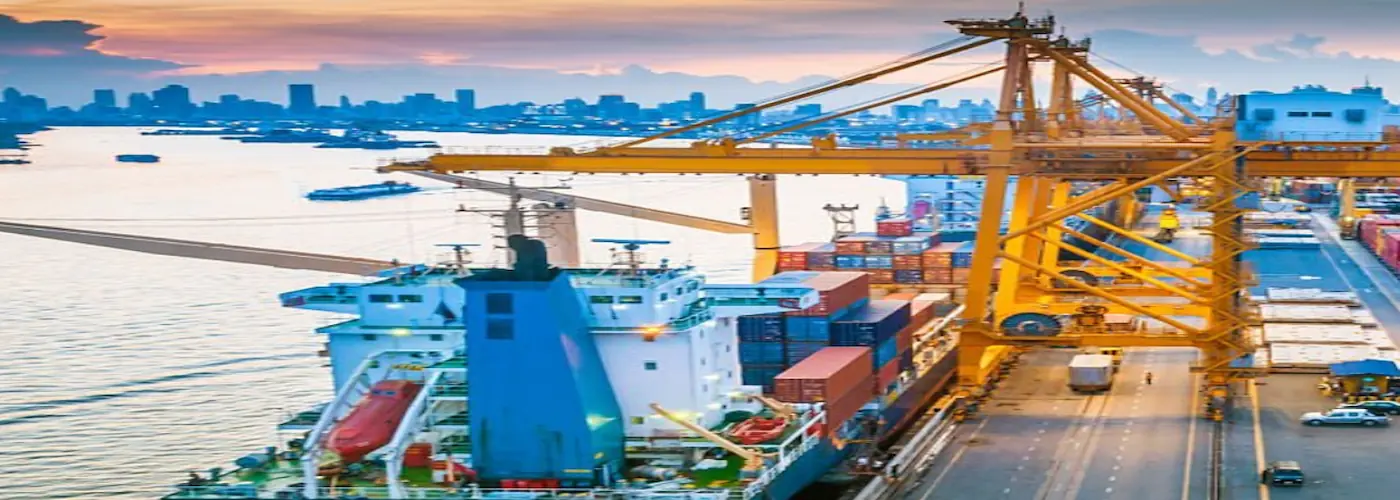
IQF Frozen Mackerel Fillets — China's Role as Global Re-Export Processing Hub
Shandong and Liaoning plants import WR material, run filleting and freezing lines, and ship skin-on IQF fillets onward to Japan, the EU, the USA and Middle East foodservice — the invisible WR→fillet→re-export bridge behind many iqf frozen mackerel fillets suppliers east asia searches. Scale and labour structure make China competitive on throughput; buyers still need to audit species, glaze and CoC on the exit certificate, not only the headline carton price.
Standard export grades include skin-on pin-bone-in portions in 10kg IQF master cartons; premium pin-bone-out lines carry tighter weight windows and lower glaze targets. Where MSC claims continue through processing, the CoC must chain from raw material through the Chinese plant — your certifier validates this; we do not replace that audit.
| Input raw material | Output fillet product | Destination | Key requirement |
|---|---|---|---|
| S. scombrus WR — Norway/Iceland | IQF skin-on fillet 100–200g · 10kg carton | EU retail · USA · Japan | MSC CoC on Norwegian input + plant MSC where claimed |
| S. japonicus WR — Japan/Korea | IQF skin-on fillet 80–160g · 10kg | Japan karaage factories · ME foodservice | MHLW-accepted plant + re-export permits as applicable |
| T. murphyi WR — Peru | IQF skin-on fillet 80–140g · 10kg | EU private label · Eastern Europe | SANIPES on Peruvian input + EU-approved Chinese plant list |
| Re-export fillets may show China as processing country on customs documents even when raw fish is Norwegian or Peruvian — if you need retail "Product of Norway" consumer labels, source fillets from Norwegian plants instead of a China re-export path. | |||
Frequently Asked Questions — Frozen Mackerel for East Asia
- What is HGT format and why is it used for frozen mackerel exports to Chinese canning plants?
- HGT removes head, gut and tail while keeping flanks intact so canning lines can fill tins without a full filleting step — saving labour and increasing throughput. Yields are typically ~70–75% of WR weight. Dalian, Qingdao and Zhoushan buyers quote HGT alongside WR on the same species lines.
- What are the GACC registration requirements for exporting frozen mackerel to China?
- Register the overseas plant on GACC before first shipment, print the registration number on every carton, file CIFER pre-arrival data, pass port inspection (with possible lab holds), and meet Chinese label rules. Annual list updates mean you re-check plant status each season.
- What does "saba" mean in Japanese frozen mackerel trade and what specification does Japan require?
- Saba (サバ) is Scomber japonicus. Japanese contracts quote fat minima, size bands, glaze caps and provenance clauses agreed buyer-by-buyer; Toyosu fresh tone often informs weekly sentiment on frozen import offers. Forward buyers place coverage ahead of peak autumn landings rather than chasing only spot packs.
- What is tô-thôo-hî and why does Taiwan import frozen Spanish mackerel steaks?
- Tô-thôo-hî (土魠魚) is Taiwanese for Scomberomorus commerson, the base fish for tô-thôo-hî-ko soup. Imports land IQF WR for monger-cut steaks or pre-cut IQF steaks for chains, mainly through Keelung with Indian Ocean feeder links. Declare the Latin name on customs documents.
East Asia Frozen Mackerel — Related Pages
Ready to source frozen mackerel?
Send your specs and get a competitive quote within 24h.